Case summary
At a glance
The ISX-3 in wound sensor research application
Full reference article
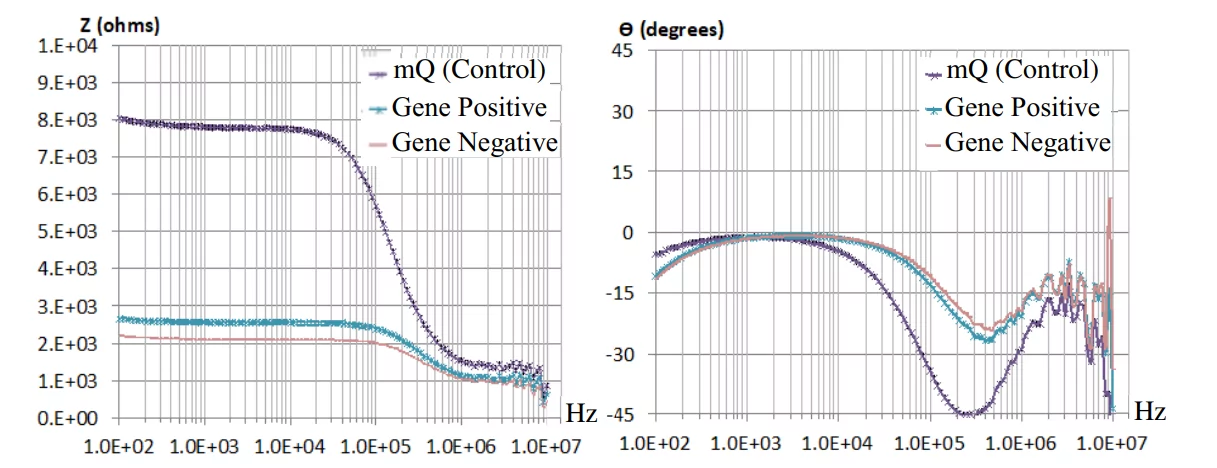
Sensors for monitoring wound infections are important to improve care management especially for chronic wounds. As detection parameter the formation of extracellular chromatin was chosen which has characteristic dielectric properties in ionic solvents due to its bound negative charges. Experiments with planar electrodes resulted in a high impedance increase of nearly 450%. The analysis of the relative permittivity revealed a cut-off frequency at 5 kHz. It is shown for the very first time that the changing electrical medium properties during Neutrophil Extracellular Traps (NET) formation are relevant for the occurring dispersion. A textile sensor set-up is proposed to fulfill the requirements of miniaturization and bio-compatibility. With these experimental results it is possible to design a fiber-based sensor based on an impedance detection principle.