
EIS and EIT. In one system.
The ISX-3 EIT starts with the full measurement capabilities of Sciospec’s ISX-3 impedance analyzer and adds a 32- or 64-port any-to-any multiplexer plus a dedicated EIT measurement mode.
It is built for experiments where spatial information matters, but the detailed impedance spectrum matters just as much – or more – than maximum imaging speed.
Use it when you want to see how the electrical response is distributed across an electrode array and still keep the broad frequency range, detailed sweeps, precision controls and flexible 2-, 3- and 4-electrode EIS that make the ISX-3 a full impedance analyzer.
- Full ISX-3 EIS measurement: 100 mHz to 10 MHz, up to 2048 frequency points
- 32- or 64-port any-to-any multiplexer with dedicated EIT acquisition mode
- Sequential spatial acquisition for experiments where spectral depth matters more than maximum frame rate
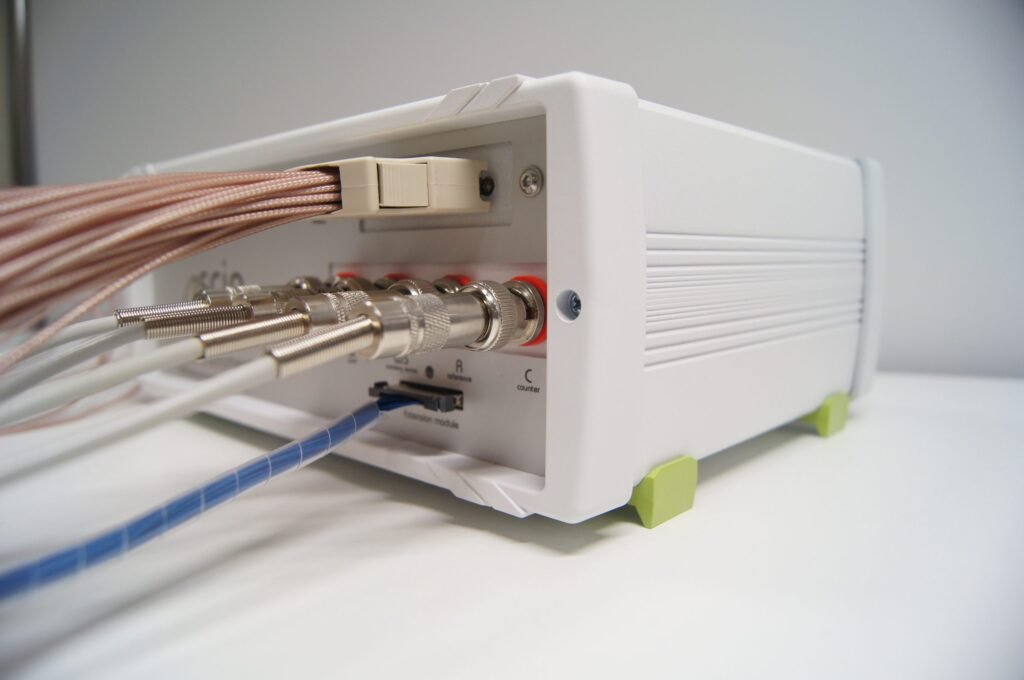
100 mHz - 10 MHz
FULL IMPEDANCE SPECTROSCOPY
UP TO 2048
FREQUENCY POINTS
32 / 64
FLEXIBLE ELECTRODE PORTS
0.1% |Z|/Z
IMPEDANCE ACCURACY
Bring full impedance spectroscopy into the EIT experiment
SAME 32 / 64 ELECTRODE ARRAY → EIS MODE: SELECT 2 / 3 / 4 ELECTRODES → DETAILED SPECTRUM | EIT MODE: SELECT INJECTION PAIR → SCAN ARRAY VOLTAGES SEQUENTIALLY → NEXT PAIR → EIT FRAME → RECONSTRUCT
Measure the spectrum at the electrode configuration you need
Use 2-, 3- or 4-electrode measurements, broad sweeps, automatic ranging, precision settings and standard ISX-3 analysis across the flexible multiplexer.
Turn the same electrode array into a tomographic measurement
Define current-injection pairs and frequency blocks. For each injection state, ISX-3 EIT measures the selected array voltages sequentially and stores the result as an EIT frame for imaging or custom analysis.
More measurement depth, less temporal speed
The ISX-3 uses one high-performance analyzer frontend and multiplexes it through the array. That preserves analyzer-level spectroscopy, but it does not provide the simultaneous voltage sampling or high frame rates of the dedicated EIT systems.
One setup for spectra, spatial scans and EIT
Use the same instrument when the project moves between detailed local EIS, multiplexed multi-electrode measurements and tomographic reconstruction instead of maintaining separate measurement stacks.
Technical specifications
Key specifications for first technical qualification. The ISX-3 EIT combines the released ISX-3 analyzer specifications with the MUX32/MUX64 and the EIT option documented in the current ISX-3 manual.
Parameter
Specification
Details
ISX-3 IMPEDANCE SPECTROSCOPY
Frequency range
100 mHz - 10 MHz
Released standard ISX-3 range; higher-frequency analyzer options exist, but suitability through the EIT/MUX path should be reviewed for the actual setup
Frequency points
1 - 2048 per sweep
Linear/logarithmic and block-wise frequency configuration supported
Impedance range
mΩ - GΩ
Released impedance-spectroscopy range; usable accuracy depends on impedance, frequency, cables, fixtures and routing
Impedance accuracy
|Z|/Z: 0.1%
See released accuracy contour for performance across frequency and impedance
Phase accuracy
0.1°
Released impedance-spectroscopy specification
AC voltage excitation
1 mV - 1 V peak
Voltage-excitation mode
AC current excitation
10 µA - 10 mA peak
Current-excitation mode
Electrode configurations
2-, 3- and 4-electrode
Software-configurable in standard EIS / MUX operation
DC bias
±1 V
ISX-3 main measurement-port capability; do not assume availability through every EIT/MUX state without configuration review
Compensation
Open / short / load
Recommended when the measurement setup changes
EIT / MULTIPLEXER
MUX ports
32 or 64
Any-to-any MUX32 / MUX64
MUX role assignment
C / R / WS / W
Any port can be assigned to the required 2-, 3- or 4-electrode measurement role in multiplexed EIS mode
EIT electrode role
Dual-role ports
Ports serve as voltage-measurement and current-injection connections in EIT mode
EIT voltage acquisition
Sequential across measurement channels
Key architectural difference from dedicated Sciospec EIT systems
EIT injection settings
User configurable
Preconfigured patterns plus user-defined injection pairs; manual documents up to 128 injection rows
EIT multifrequency setup
Up to 2048 total frequency points
Frequency blocks can be combined; the full sweep is measured for an injection setting before the next injection pair
Signal processing
Sciospec SineFit
Real and imaginary voltage components extracted in real time
EIT output
EIT frame data
Contains measurement results across selected channels and injection settings
EIT measurement connectors
MDR40 or MEC1 edge-card
Released EIT-option interfaces
SOFTWARE & DATA
EIS visualization
Bode / Nyquist / time trace and data export
Standard ISX-3 software capabilities
EIT measurement views
Frame table / voltage spectrum / voltage-difference / U-shape
Documented EIT analysis views
Built-in EIT imaging
Time- and frequency-difference
Current manual documents built-in reconstruction for adjacent injection pattern with circular imaging domain
External reconstruction
Raw EIT data / MATLAB / EIDORS route
Use when geometry or reconstruction extends beyond the built-in standard image workflow
Control interfaces
USB / Ethernet / Sciospec COMInterface
Instrument and measurement control; optional synchronization / I/O depending on configuration
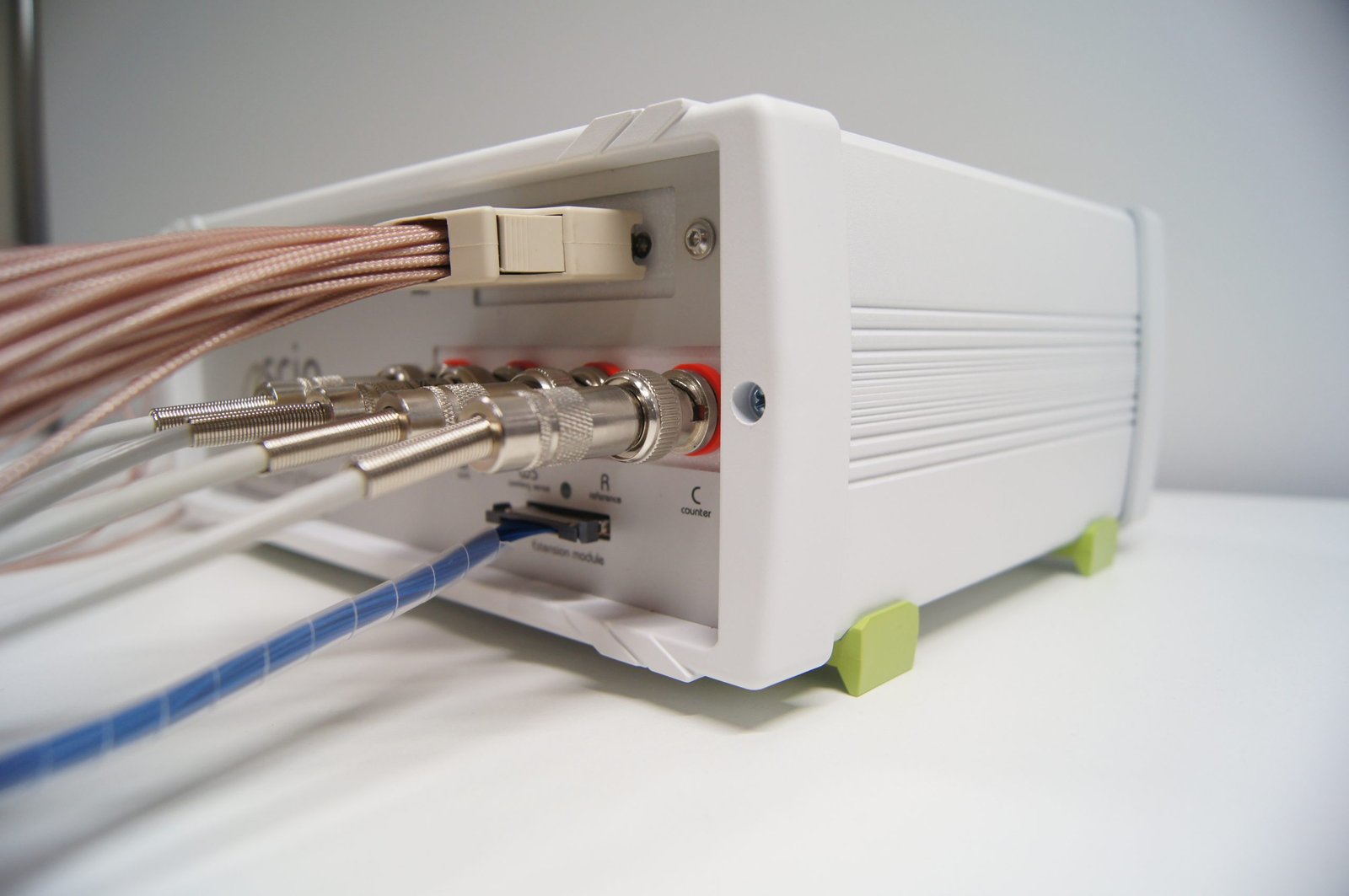
ISX-3 EIT with 32/64-port array — Show the analyzer and multiplexer physically connected to a phantom, sensor or electrode structure so the product is immediately understood as more than a standard ISX-3.
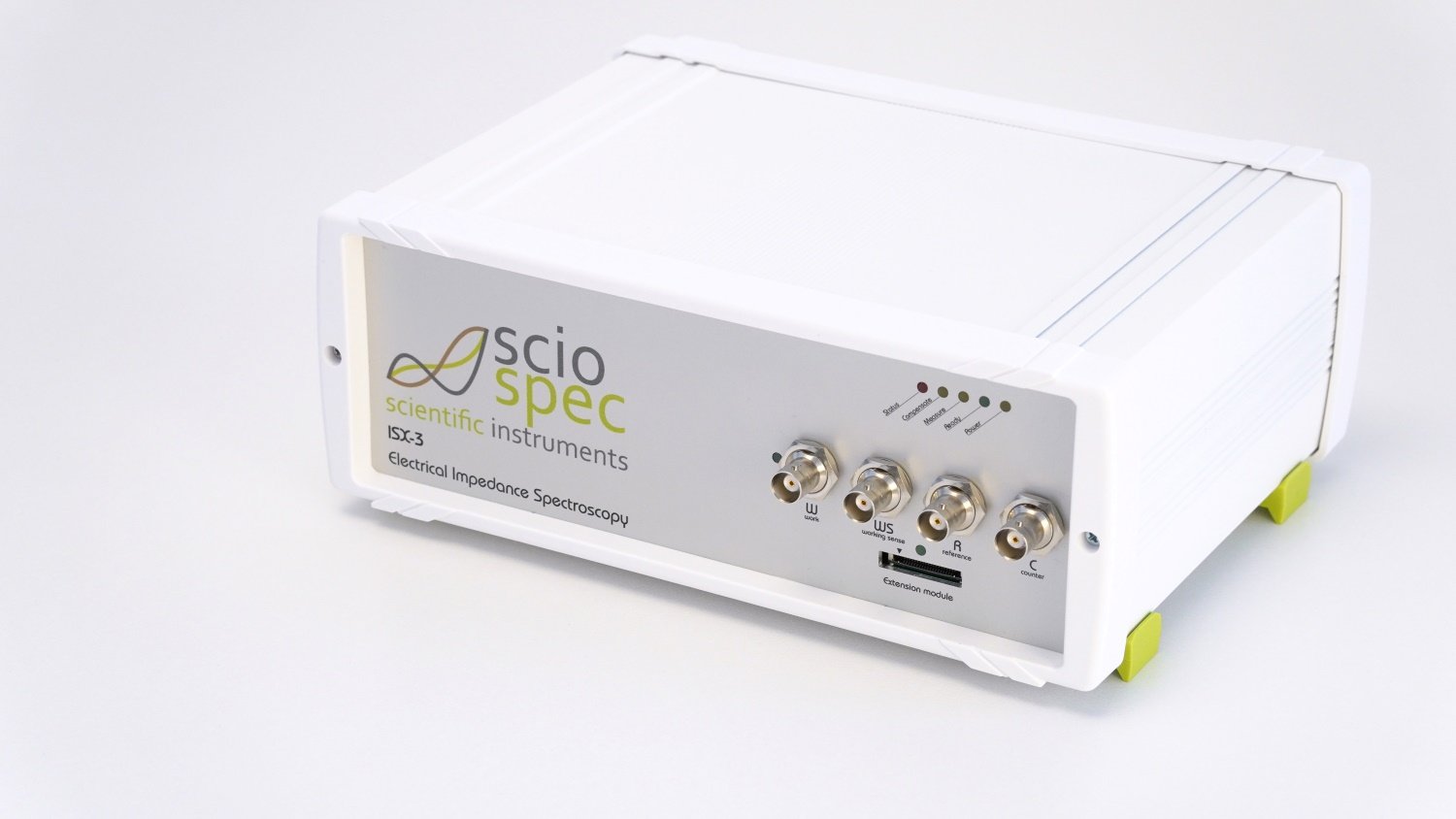
Detailed EIS spectrum — Use a real Bode or Nyquist view from the ISX-3 software. This is the capability the dedicated EIT products do not try to replace.
EIT setup and injection pattern — Show frequency blocks and the configurable injection pattern from the EIT workflow rather than a generic software screenshot.
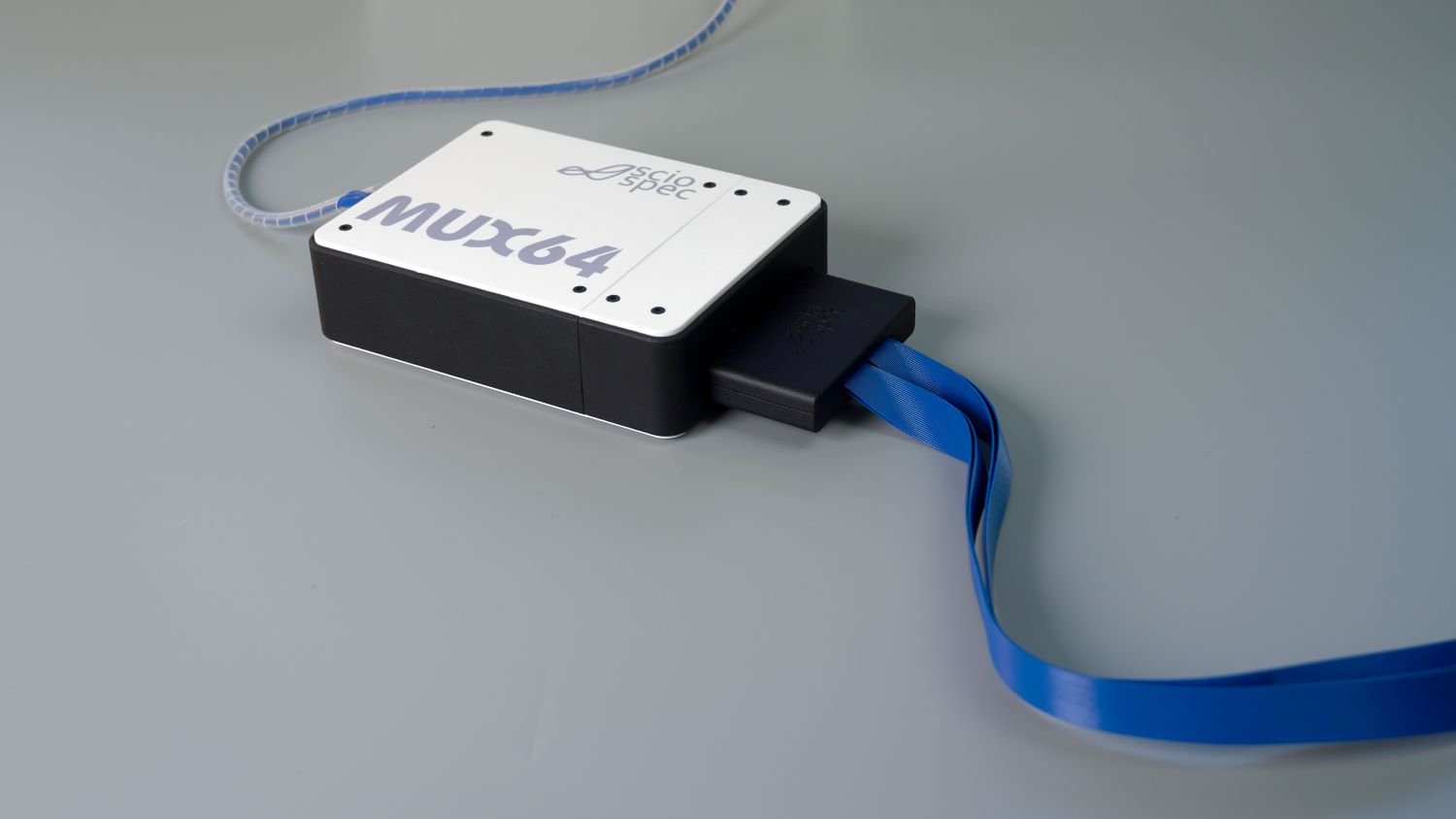
EIT reconstruction and raw data — Show the standard EIT image together with a voltage-spectrum/U-shape or raw-data view to make the open research workflow visible.

Applications where spatial information and detailed spectroscopy belong together
Study how the spatial response changes with frequency
Use dense frequency sweeps and configurable injection patterns when the contrast itself is dispersive and a single-frequency EIT image does not capture the full behaviour.
Map frequency-dependent behaviour across the sample
Investigate spatial differences in conductive, dielectric or interfacial behaviour where the sample changes slowly enough for sequential acquisition and detailed spectroscopy is valuable.
Use one electrode structure for EIS and EIT
Switch between detailed 2-/3-/4-electrode spectra and EIT-style spatial measurements while the sensor geometry, interfaces and analysis are still evolving.
Compare spectra, injection strategies and reconstruction in one setup
Use the open EIS and EIT workflows when the project is developing new spatial-impedance methods rather than simply consuming a fixed imaging protocol.
Measurement performance and an open EIT workflow
See where the analyzer is strongest
Use the released accuracy contour and a representative impedance spectrum from the ISX-3 manual to show the usable frequency-impedance envelope and how measurement performance changes toward its limits.
Take Sciospec EIT data into an open reconstruction workflow
The existing EIDORS application note demonstrates the path from Sciospec EIT data into external processing and reconstruction - useful when the standard image workflow is not the end of the analysis.
EIT measurements with the full flexibility of the ISX-3
Choose the measurement topology that fits the sample
Use conventional ISX-3 EIS with software-configurable 2-, 3- or 4-electrode measurements when leads, contacts or electrode interfaces need to be separated from the sample response.
Trade measurement speed for additional stability
Adjust the ISX-3 precision setting when a difficult impedance measurement benefits from more measurement stability rather than the shortest acquisition time.
Work with the complete measurement setup
Use open-short-load compensation to account for setup parasitics. The ISX-3 also provides +/-1 V DC bias on the main measurement port when the experiment requires it.
Adapt the analyzer to the sensor
The ExtensionPort supports application-specific front ends and digital I/O when the standard connection is not enough. Review the exact interface and measurement path with Sciospec.
Configure your ISX-3 EIT
Choose the frequency range, EIT-MUX channel count, frontpanel connectors and the phantom / fixture accessories that match your EIT or multiplexed EIS workflow.
Loading configurator…
Switch from detailed spectra to EIT without changing instruments
Run detailed impedance spectroscopy
Configure 2-, 3- or 4-electrode measurements, frequency sweeps, excitation, precision and compensation; inspect spectra in the standard ISX-3 workflow.
Define frequencies and current-injection patterns
Create EIT frequency blocks, set current amplitude and precision, and use predefined or user-defined injection pairs around the 32/64-port array.
Inspect more than the reconstructed image
Review complete EIT frames, voltage spectra, voltage differences and U-shape plots to understand the boundary measurements behind the image.
Use the standard image or build your own analysis
Use the built-in time-/frequency-difference image workflow for standard adjacent circular setups, or export raw EIT data for MATLAB/EIDORS and custom reconstruction.
ISX-3 EIT or dedicated EIT?
Choose dedicated EIT when the object changes quickly
The dedicated systems acquire all voltage channels synchronously for each injection state and are the right route for dynamic imaging and high temporal performance. Choose ISX-3 EIT when the sample is slow enough for sequential scanning and the spectrum matters more.
Choose the normal analyzer when you do not need tomography
If you only need detailed impedance spectra at one or a few conventional measurement connections, the standard ISX-3 is simpler. Add EIT when the project genuinely needs a 32/64-electrode spatial measurement or EIT workflow.
Keep your existing stack when it already does the job
A separate analyzer and multiplexer can be perfectly sensible for slow automated measurements. ISX-3 EIT becomes attractive when you want one integrated control, port-routing and EIT workflow rather than building the spatial acquisition around separate instruments.
Build it when switching and acquisition are part of the research
Custom hardware gives complete freedom. ISX-3 EIT is stronger when the scientific work is the impedance, material, sensor or reconstruction and you want a professional analyzer underneath it.
When the standard system is only the starting point
Many projects stay with the standard ISX-3 EIT. Others eventually need the measurement adapted to a special electrode array, integrated into a larger experimental system or translated into dedicated product hardware. Those are different extension paths – not a mandatory sequence.
Sciospec can support the part that actually becomes limiting: the physical interface, application-specific frontend, software/system integration or a separately engineered OEM implementation.
Connect an unusual electrode structure cleanly
Custom cabling, adapter PCBs or carriers can translate a non-standard array or sensor into the ISX-3 EIT connection scheme.
Shape the measurement around the sensor
Where the sensor needs additional analogue or digital functionality, Sciospec can evaluate a dedicated frontend around the ISX-3 ExtensionPort.
Put EIS and EIT into the larger setup
Use the Sciospec COMInterface, synchronization and I/O options to integrate measurements into automated experiments, test systems or machinery.
Move to purpose-built hardware when the requirements are stable
For recurring products or instruments, Sciospec can scope dedicated electronics, switching, firmware, mechanics and production support around the validated measurement.
Frequently Asked Questions
What is the ISX-3 EIT?
How is ISX-3 EIT different from EIT16 or EIT32/64/128+?
Does ISX-3 EIT measure all channels simultaneously?
How fast is one complete EIT frame?
What frequency range does the ISX-3 EIT cover?
Can I still use 2-, 3- and 4-electrode impedance measurements?
Can I apply DC bias in EIT mode?
Can I define my own EIT injection pattern?
Can I use detailed multifrequency sweeps in EIT mode?
What EIT reconstruction is built in?
Can I use my own reconstruction or EIDORS?
Can I use ISX-3 EIT without reconstructing an image?
When should I choose a dedicated EIT system instead?
When should I choose the normal ISX-3 instead?
Is ISX-3 EIT the right choice for lung EIT?
Choose the EIT system around what your experiment values most
Configure ISX-3 EIT and request a quote
Choose 32 or 64 EIT/MUX ports, the ISX-3 analyzer configuration, interfaces, accessories and quantity.
Review the measurement before choosing the architecture
Send the electrode map, expected impedance, frequency range, number of spectral points, injection sequence and acceptable full-scan time. We will review whether ISX-3 EIT is the right fit.
Move to dedicated EIT
If dynamic imaging, synchronized voltage acquisition or high frame rate is the real requirement, compare EIT16 and EIT32/64/128+ instead.
Get in touch with us
Phone
Headquarters
Sciospec Scientific Instruments GmbH
Leipziger Str. 43b
04828 Bennewitz, Germany
Open in Google Maps