At a glance
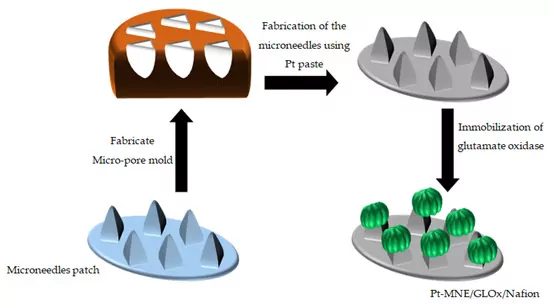
Herein, a simple method has been used in the fabrication of a microneedle electrode (MNE). To do this, firstly, a commercial self-dissolving microneedle patch has been used to make a hard-polydimethylsiloxane-based micro-pore mold (MPM). Then, the pores of the MPM were filled with the conductive platinum (Pt) paste and cured in an oven. Afterward, the […]
Full reference article
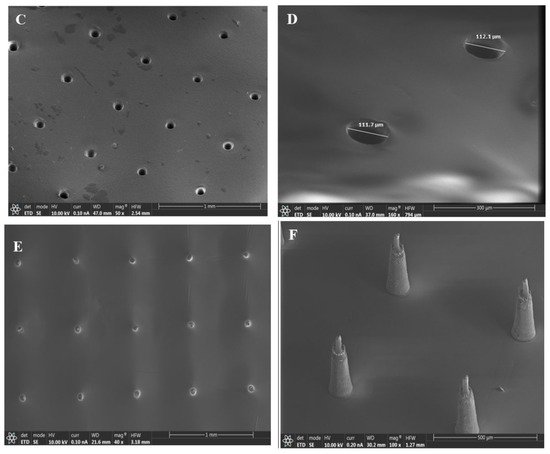
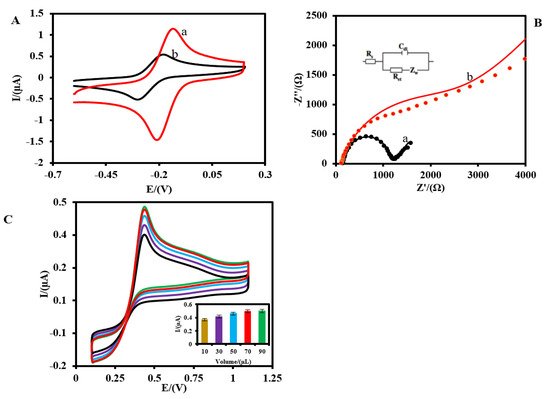
Herein, a simple method has been used in the fabrication of a microneedle electrode (MNE). To do this, firstly, a commercial self-dissolving microneedle patch has been used to make a hard-polydimethylsiloxane-based micro-pore mold (MPM). Then, the pores of the MPM were filled with the conductive platinum (Pt) paste and cured in an oven. Afterward, the MNE made of platinum (Pt-MNE) was characterized using cyclic voltammetry (CV), electrochemical impedance spectroscopy (EIS), and scanning electron microscopy (SEM). To prove the electrochemical applicability of the Pt-MNE, the glutamate oxidase enzyme was immobilized on the surface of the electrode, to detect glutamate, using the cyclic voltammetry (CV) and chronoamperometry (CA) methods. The obtained results demonstrated that the fabricated biosensor could detect a glutamate concentration in the range of 10–150 µM. The limits of detection (LODs) (three standard deviations of the blank/slope) were also calculated to be 0.25 µM and 0.41 µM, using CV and CA, respectively. Furthermore, the Michaelis–Menten constant (KMapp) of the biosensor was calculated to be 296.48 µM using a CA method. The proposed biosensor was finally applied, to detect the glutamate concentration in human serum samples. The presented method for the fabrication of the mold signifies a step further toward the fabrication of a microneedle electrode.

Learn more about the ISX-3 impedance analyzer

Class-Leading Impedance analyzer, the Sciospec ISX-3