At a glance
Explore how the ISX-3 Impedance Analyzer enables rapid, real-time detection of Legionella pneumophila in water samples through label-free electrochemical impedance spectroscopy.
Full reference article
Real-Time, Label-Free Detection of Legionella in Water Using Impedance Spectroscopy with ISX-3
The publication “A novel electrochemical impedance-based platform for rapid detection of Legionella pneumophila in water samples” introduces an innovative biosensing system designed to identify Legionella pneumophila a key bacterial pathogen linked to severe respiratory infections. The study presents a real-time, label-free detection platform using electrochemical impedance spectroscopy (EIS) paired with anti-Legionella antibodies for pathogen-specific identification.
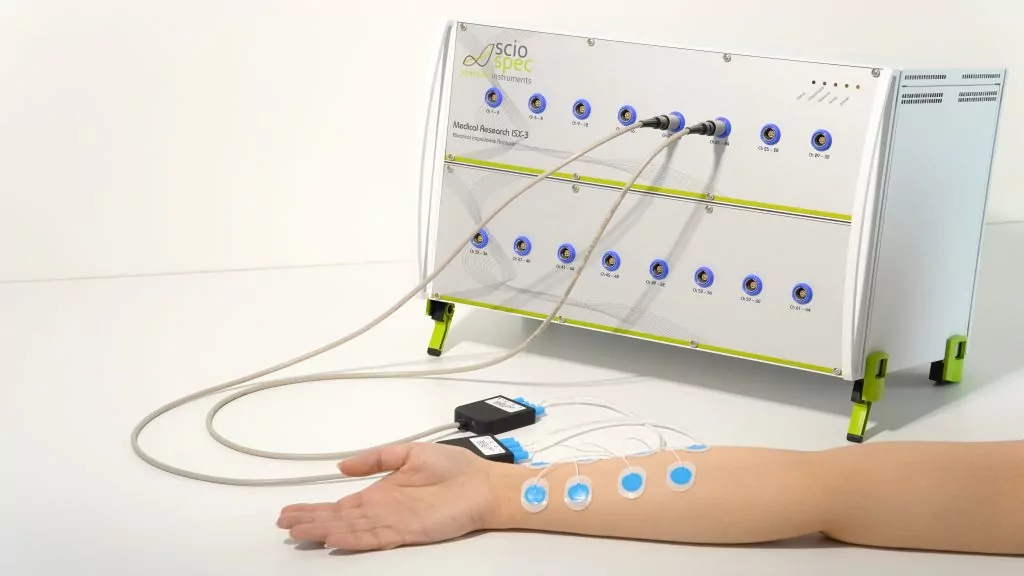
Crucially, the study relies on Sciospec’s ISX-3 Impedance Analyzer to measure electrical signals that reflect the presence of bacteria offering significant time savings compared to traditional culture-based methods that can take days. This connection underscores how Sciospec’s technology supports real-time, field-adaptable microbial diagnostics.
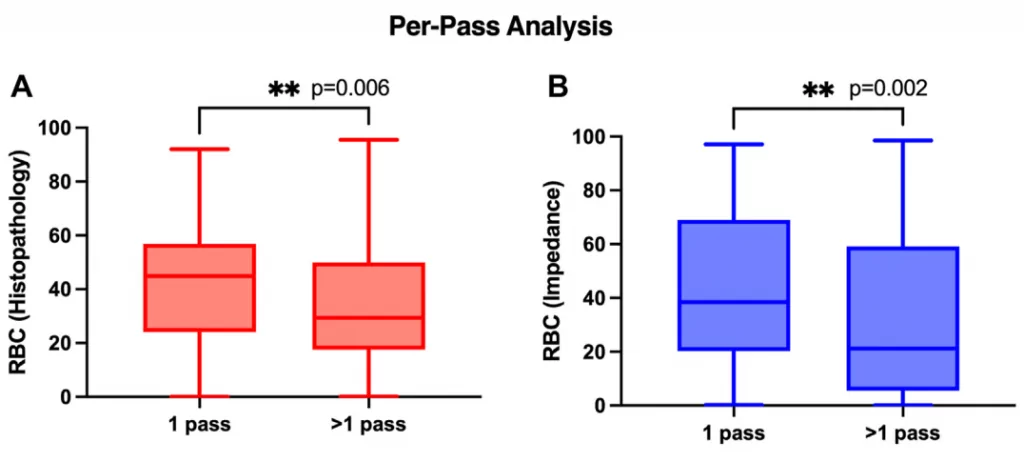
*Sahin, C., Giraud, A., Jabrah, D., … Sakai, N., Cognard, C., & Doyle, K.Electrical impedance measurements can identify red blood cell–rich content in acute ischemic stroke clots ex vivo associated with first-pass successful recanalization. https://www.rpthjournal.org/article/S2475-0379(24)00062-1/fulltext
Why Rapid, Label-Free Detection of Legionella Is a Priority
Legionella contamination in water systems is a major public health concern particularly in hospitals, cooling towers, and public infrastructure. Routine testing currently depends on time-consuming culturing methods that delay interventions and increase outbreak risks. The goal of this study was to design a faster, label-free, and portable detection method for identifying L. pneumophila directly in water samples.
By integrating electrochemical impedance detection with antibody-functionalized sensors, the researchers developed a portable diagnostic tool capable of identifying bacterial concentrations . The system demonstrated strong correlation with PCR results and was fully validated using the Sciospec ISX-3 system, which formed the quantitative backbone of the detection system
🔍 Interested in modernizing microbiological testing? Contact Our team to learn how our solutions can assist your research.
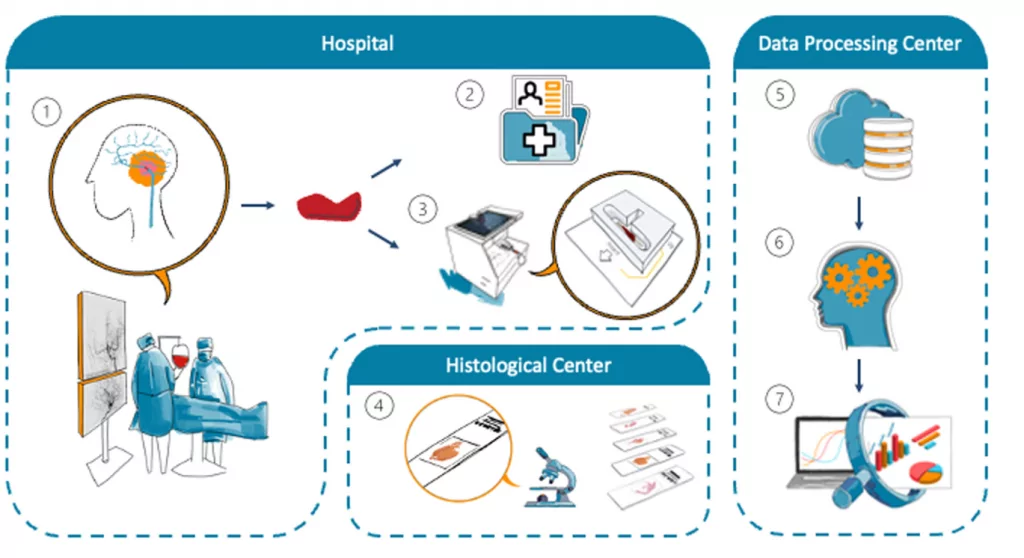
Workflow: mechanical thrombectomy (1), patient information (2), electrical impedance measurements (3), histology (4), cloud database (5), machine learning (6), and correlation analysis (7)
ISX-3 for Real-Time Legionella Biosensing
In this work, the Sciospec ISX-3 played a direct and measurable role. The analyzer was used to capture real-time impedance data from field-deployable screen-printed electrodes functionalized with anti-Legionella antibodies. As bacteria bound to the electrode surface, changes in charge transfer resistance and impedance phase were recorded.
The ISX-3’s contribution included:
- High-frequency precision: for detecting subtle impedance shifts due to bacterial binding.
- Stable, reproducible signal acquisition: critical for validating results across samples.
- Flexible integration: with miniaturized sensor formats, enabling testing outside conventional lab environments.
The performance of the platform; its ability to detect bacterial presence quickly and accurately, depended heavily on the measurement resolution and frequency range of the Sciospec ISX-3.
How the ISX-3 Enables High-Resolution Biosensing with Impedance Spectroscopy
Electrical impedance spectroscopy (EIS) detects how electrical current behaves across a sensing interface in this case, an electrode coated with antibodies. As L. pneumophila bacteria attach to the surface, they disrupt the electrical signal in ways that can be measured and quantified.
Sciospec’s ISX-3 analyzer supports this process through:
- Wide frequency range; allowing selection of optimal signal windows for detecting biological events.
- Sensor adaptability; essential for use with printed electrodes or lab-on-chip platforms.
- Low-noise electronics; ensuring reliable detection of minute changes due to bacterial interaction.
👉 Want to build or validate custom biosensors? See how the ISX-3 accelerates sensing system development
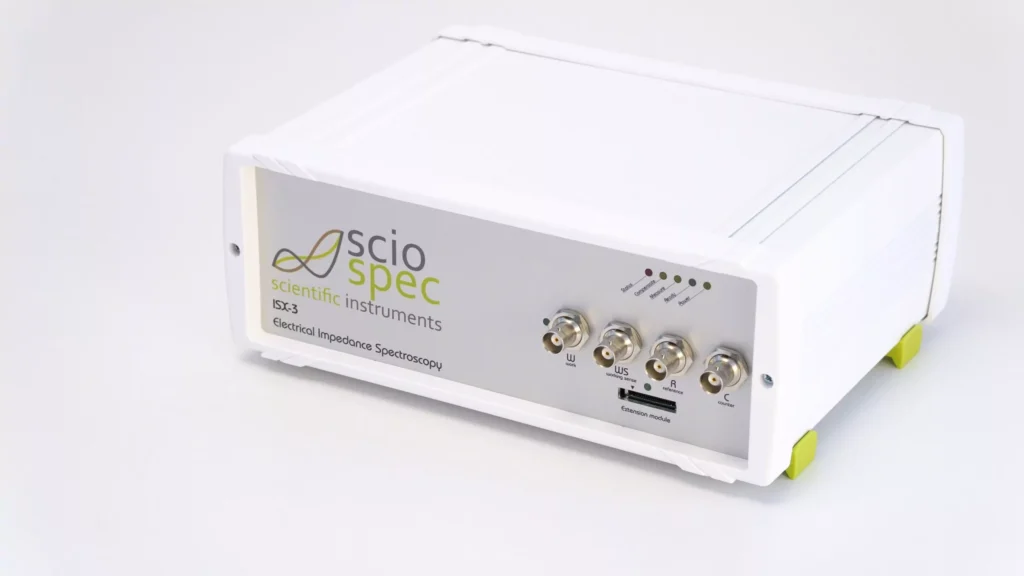
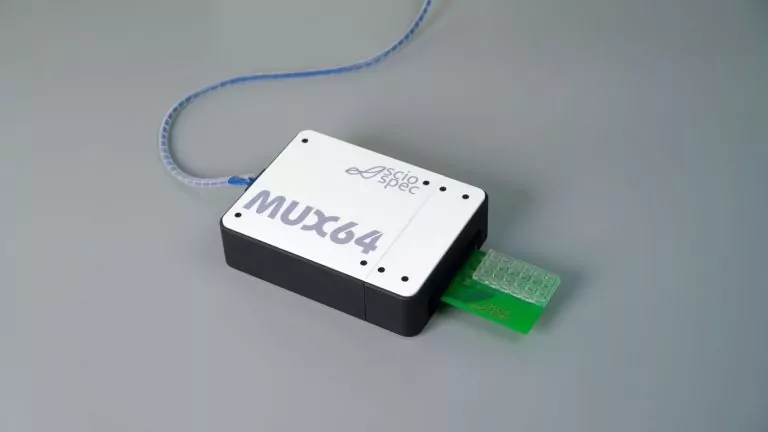
ISX-3 Multiplexing for Multi-Sample Legionella Detection
While this study focused on single-sample analysis, applications in public health monitoring or high-throughput water testing often require multiplexed detection systems. The ISX-3 platform offers a scalable measurement framework that allows:
- Simultaneous monitoring of multiple electrodes or sample sites using 32- or 64-channel multiplexers.
- Rapid screening workflows suitable for buildings, hospitals, or field-testing kits.
- Future expansion into multi-pathogen detection, leveraging the same platform.
👉 Looking to scale your detection capabilities ? Learn how Sciospec enables multiplexed setups for real-world deployment
Supporting Diagnostic and Environmental Research with the Medical Research ISX-3
For research teams in environmental health, biosensing, or pathogen detection, the Medical Research ISX-3 provides a platform tailored to lab-based and field-adaptable testing needs. It bridges high-resolution electrical measurement with flexible interfacing for biosensors and electrodes.
The Medical Research ISX-3 is well-suited for:
- Integration into point-of-need biosensor platforms.
- Validation of functionalized surfaces for microbial detection.
- Environmental testing prototypes that require accurate, scalable impedance data.
While not a medical device, it supports the research and prototyping of diagnostic systems with real-world relevance.
👉 Working on biosensor development or environmental monitoring? Discover how the Medical Research ISX-3 supports innovation in pathogen detection

Want to dive deeper? Talk to our experts!
Our experts are ready to help you understanding how this technology works and how you can apply and integrate it into your work. Get in touch today to get a personalized consultation to enhance your work with our advanced solutions
Enabling Real-Time Legionella Detection with Sciospec’s ISX-3 Platform
This study highlights the potential of impedance spectroscopy to revolutionize rapid waterborne pathogen detection. By enabling fast, label-free identification of Legionella pneumophila, the biosensing platform demonstrates a viable path toward real-time water safety testing. The results, made possible through precision measurements from the Sciospec ISX-3, offer a foundation for future tools in microbial diagnostics.
👉 Interested in bringing your biosensing ideas to life? Reach out to our applications team to to discuss tailored impedance solutions
💡Curious for more? Check out our latest developments and products.
🧪Want to try it yourself? Contact us for more information
🚀Looking for a tailored solution? Our experts can help!
📢 Follow us on LinkedIn for more updates.
#Innovation #Sciospec #biosensing#Legionella #biosensorplatforms
Explore Related Research and Insights
explore by relevant keywords
Get in touch with us
Frequently asked questions
How can impedance spectroscopy detect Legionella bacteria in water samples ?
Impedance spectroscopy detects changes in electrical properties such as resistance and phase at the surface of an electrode. For Legionella detection, the electrode is coated with antibodies that selectively bind to L. pneumophila. When the bacteria attach, they disrupt the interface’s electrical behavior, generating measurable impedance shifts in real time.
The Sciospec ISX‑3 analyzer plays a central role by capturing these signal changes with high-frequency sensitivity and precision. This enables fast, label-free identification of Legionella at clinically and environmentally relevant concentrations.
How fast is impedance-based Legionella detection compared to traditional culture methods ?
Traditional culture-based methods typically require 3–10 days of incubation to confirm the presence of Legionella. In contrast, impedance immunosensors can deliver detection results in as little as 1–2.5 hours. This speed is enabled by the real-time signal generation that occurs upon bacterial binding. The Sciospec ISX‑3 ensures these time-critical detections are accurate by providing stable, high-resolution impedance data throughout the process
What sensitivity can impedance immunosensors achieve for Legionella detection ?
Impedance-based biosensors can detect bacterial levels as low as 10 CFU/mL, and sometimes even lower when sample preconcentration techniques are applied. Sensitivity depends on factors such as sensor design, antibody specificity, and the performance of the impedance analyzer.
The ISX 3 supports such high-sensitivity assays by offering a broad, adjustable frequency range and ultra-low-noise electronics—ensuring the capture of even minute impedance shifts associated with early-stage bacterial presence.
Can impedance spectroscopy distinguish live from dead Legionella cells ?
Yes. Unlike DNA-based methods like PCR, which detect both live and dead cells, impedance spectroscopy primarily reflects the binding of viable bacteria. This is because the changes in electrical impedance are often tied to biological activity and cell-surface interactions.
With its ability to capture real-time signal changes during binding events, the Sciospec ISX 3 enhances detection specificity by emphasizing biologically active (and likely viable) organisms.
Are impedance-based Legionella sensors suitable for field deployment ?
Yes. Many EIS-based sensors are portable and compatible with disposable electrodes or microfluidic devices. These systems eliminate the need for extensive lab infrastructure, making them ideal for on-site water safety assessments. The Sciospec ISX‑3 is well-suited for such applications thanks to its flexible hardware integration, support for field-deployable sensor formats, and compact, robust performance making it a valuable tool in environmental monitoring and public health safety workflows
Is impedance-based DNA detection suitable for real-world or portable testing ?
Yes. Unlike traditional detection methods, impedance-based techniques don’t require bulky optics or complex reagents, making them ideal for compact, mobile, or point-of-care systems. The ISX‑3 has been integrated with miniaturized biochips and simplified workflows, showing strong potential for use in clinics, remote diagnostics, or decentralized research.
👉 Get in touch to explore how our systems support portable diagnostics.