At a glance
Explore how the Sciospec CSX 64 enables real-time nanotoxicology assessment in Nasal Cell Models through impedance spectroscopy
Full reference article
Advancing In Vitro Toxicology Research with Sciospec CSX 64
The article “Using Rapid Prototyping to Develop a Cell-Based Platform with Electrical Impedance Sensor Membranes for In Vitro RPMI2650 Nasal Nanotoxicology Monitoring” (Biosensors, 2024) explores a modern approach to evaluating how airborne nanomaterials affect nasal epithelial cells. This work responds to growing interest in developing non-animal, label-free toxicity assays that better simulate human respiratory responses.
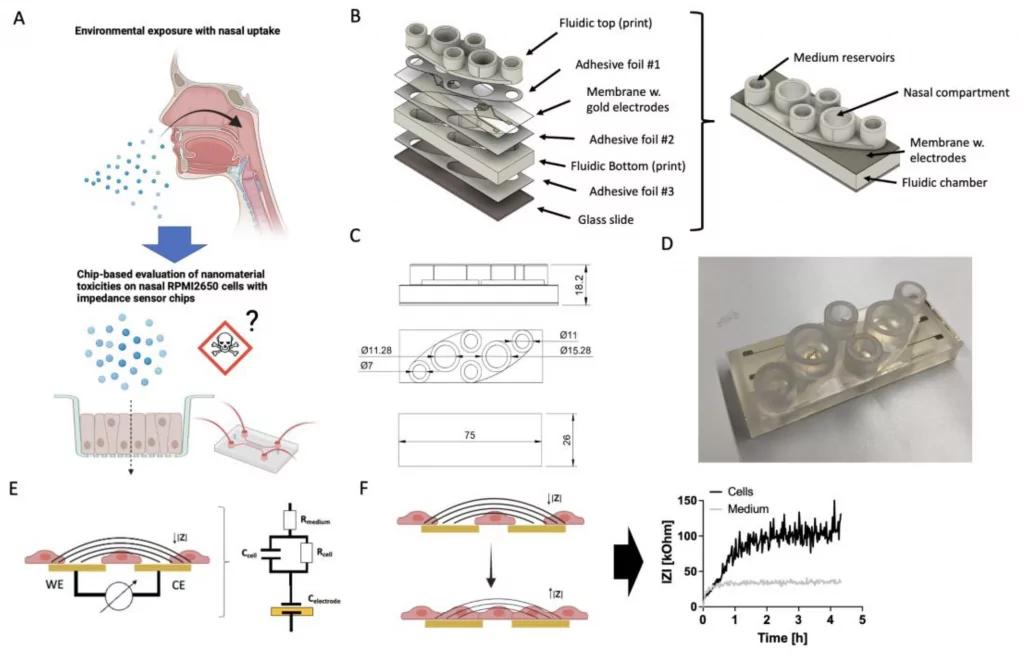
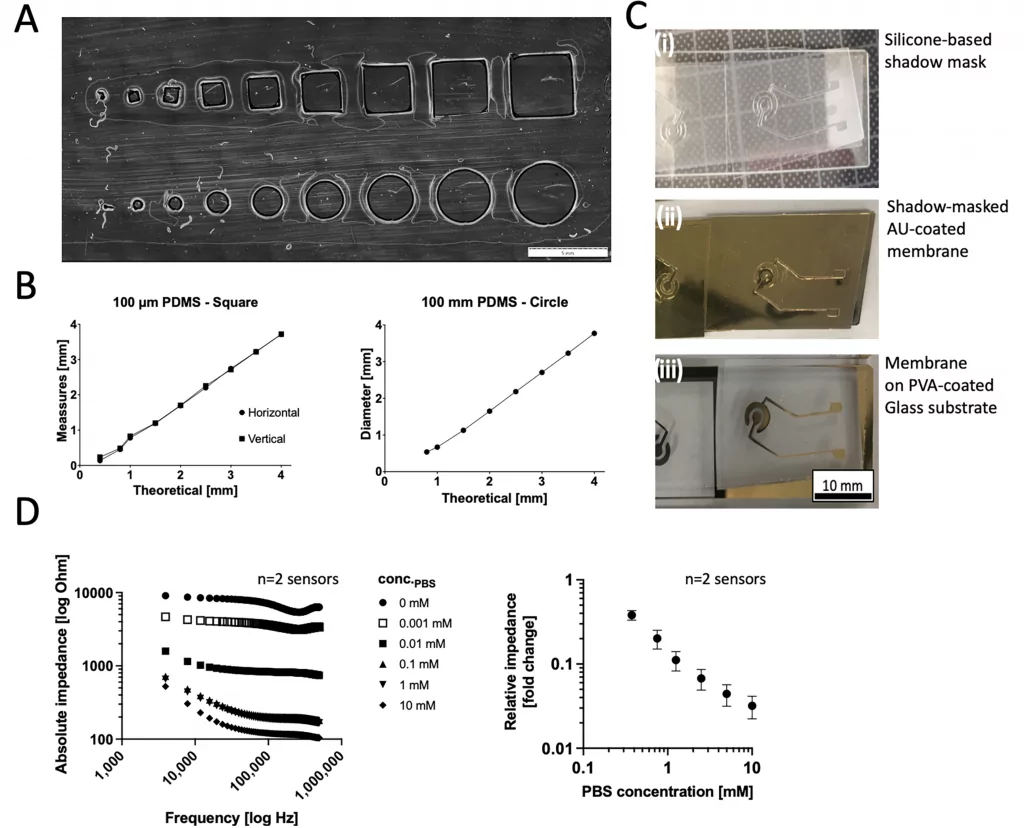
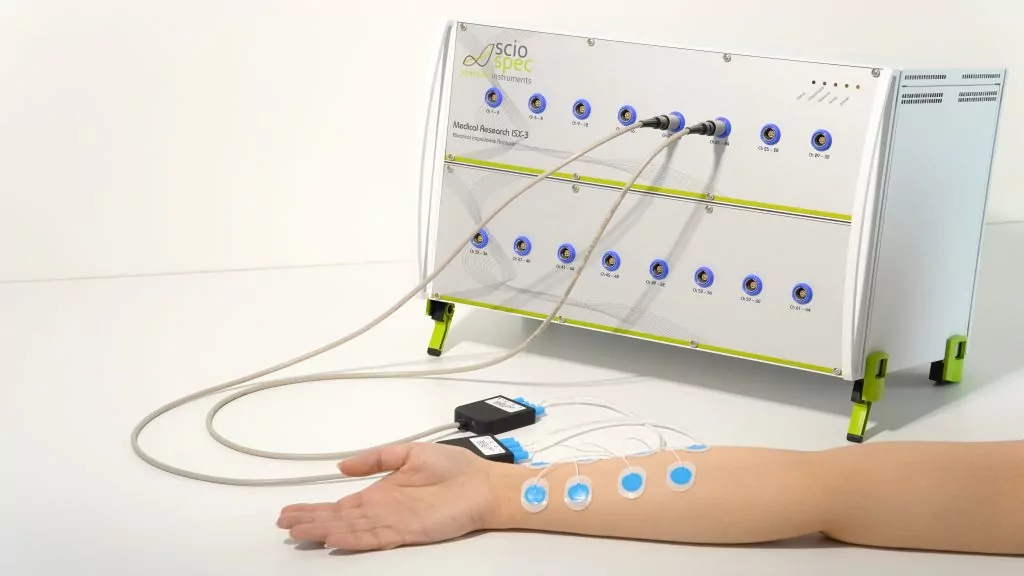
Researchers created a 3D-printed test platform with integrated electrical impedance sensor membranes. The system monitored RPMI2650 nasal epithelial cells in real-time to assess their response to silver nanoparticles. Impedance signals captured cell behavior without the need for chemical staining or invasive sampling. All measurements were supported by the Sciospec CSX‑64, enabling precise, multi-channel impedance monitoring across membrane setups.
*Vasconez Martinez, M.G., Reihs, E.I., Stuetz, H.M., Hafner, A., Brandauer, K., Selinger, F., Schuller, P., Bastus, N., Puntes, V., Frank, J., Tomischko, W., Frauenlob, M., Ertl, P., Resch, C., Bauer, G., Povoden, G., & Rothbauer, M. Using Rapid Prototyping to Develop a Cell-Based Platform with Electrical Impedance Sensor Membranes for In Vitro RPMI2650 Nasal Nanotoxicology Monitoring. Biosensors (2024). https://www.mdpi.com/2079-6374/14/2/107
Real-Time Nasal Cell Response Monitoring via Impedance Spectroscopy
Nanoparticles can penetrate the respiratory system and cause cytotoxic effects, but conventional assays often rely on endpoint staining, destructive sampling, or long incubation times. In contrast, impedance spectroscopy provides a non-invasive, real-time method for assessing how cells respond to environmental exposure.
This research showed that impedance readings from the RPMI2650 nasal cell layer varied significantly depending on nanoparticle concentration. The approach revealed cell detachment and barrier integrity changes without interrupting the culture process demonstrating a viable path for dynamic toxicity evaluation.
👉 Looking for real-time cellular health monitoring ? Contact Our team to see how CSX‑64 reveals cell response without disruption
High-Resolution Nanotoxicology Monitoring with the CSX‑64
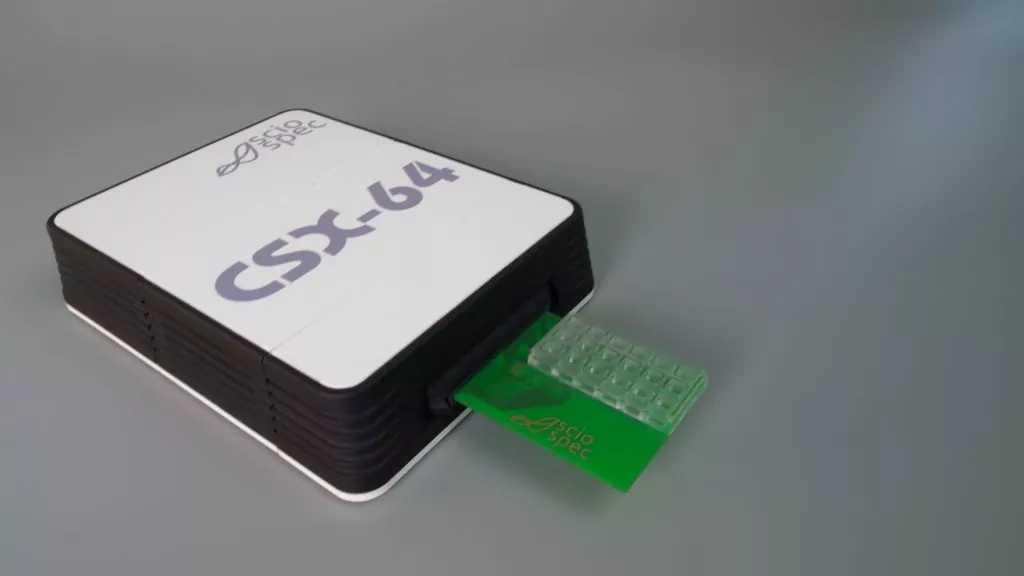
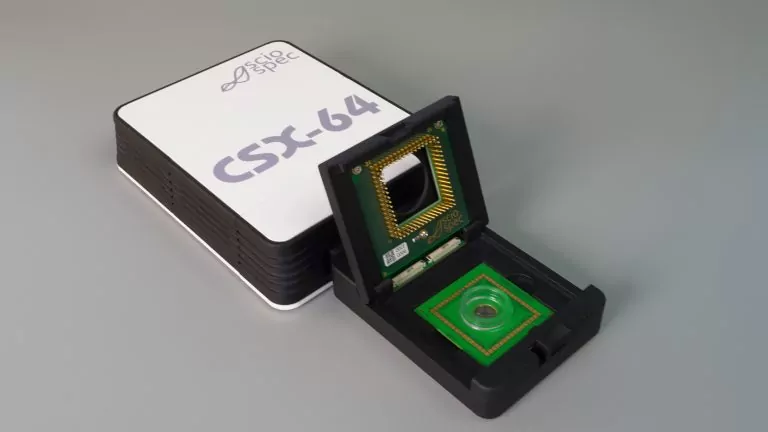
The Sciospec CSX‑64 played a central role in capturing sensitive impedance signals from cell-covered membranes. Its ability to support custom 3D-printed sensor integration enabled researchers to analyze multiple exposure conditions with precision and repeatability.
Key Advantages of Using CSX‑64 in This Study:
- 8 parallel impedance channels: Allowed real-time monitoring of multiple culture wells simultaneously.
- 64-port any-to-any multiplexing : Enabled automated switching between test conditions and replicates without rewiring.
- Support for 2-, 3-, and 4-electrode setups : Accommodated different membrane and electrode designs used in the prototype system.
- Compact form factor : Fit easily alongside the rapid prototyping and cell culture tools used in the lab.
👉 Need flexible measurement for complex in vitro setups? See how the CSX‑64 adapts to your cell-based sensor designs
Impedance Signatures of Nanoparticle Exposure
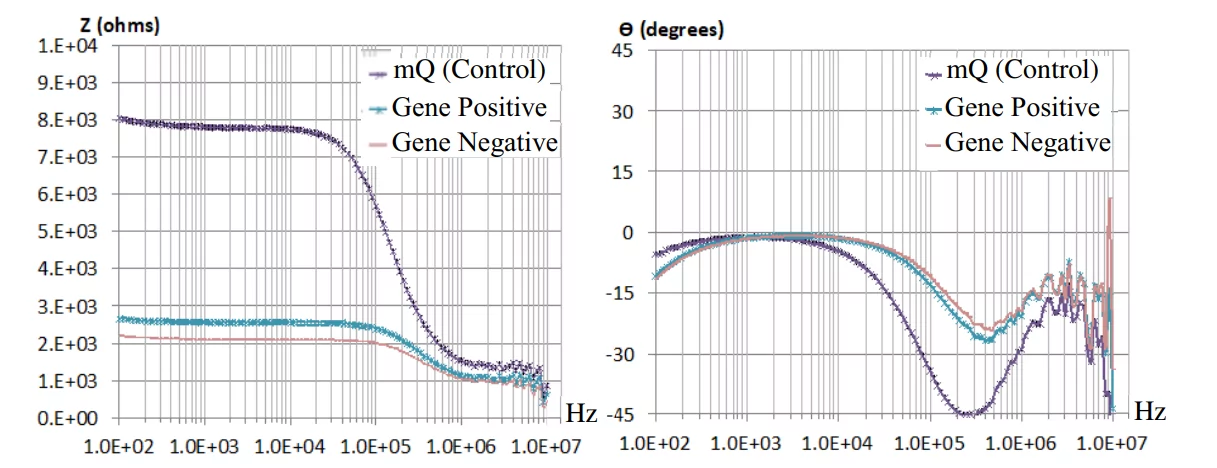
As epithelial cells respond to silver nanoparticle exposure, their electrical properties change—reflected in impedance measurements. The CSX‑64 enabled detection of barrier weakening, detachment events, and cell layer damage, with signal shifts correlating to dose and exposure time.
These measurements provide a promising alternative to traditional endpoint assays, offering both temporal resolution and non-destructive monitoring.
👉 Explore how impedance signatures reveal cell behavior during toxicological challenges with CSX‑64-enabled platforms
Scalable In Vitro Sensor Prototyping Using CSX‑64 Multiplexing
Rapid prototyping was central to this study, and the CSX‑64 matched that pace with scalable sensor integration. It supports:
- Multi-condition screening across replicated exposures or cell types.
- Automation of impedance data collection for long-term experiments.
- Adaptability to 3D-printed formats .
This makes the CSX‑64 ideal not just for development, but for transitioning sensor designs toward preclinical and regulatory research environments.
👉 Planning complex toxicology screens or high-throughput testing? See how the CSX‑64 supports scaling from prototype to preclinical validation in toxicology workflows
CSX‑64 for Respiratory Nanotoxicology and Material Testing
As part of Sciospec’s modular system portfolio, the CSX‑64 enables cutting-edge biomedical research by combining:
- Real-time electrochemical impedance spectroscopy (EIS) across multiple inputs.
- Support for various electrode types, including membrane-integrated sensors.
- Compatibility with toxicology workflows requiring non-invasive, continuous data.
Whether you’re studying respiratory toxicity, nanomaterial-cell interactions, or barrier models, the CSX‑64 gives you the measurement flexibility needed to accelerate discovery.

Want to dive deeper? Talk to our experts!
Our experts are ready to help you understanding how this technology works and how you can apply and integrate it into your work. Get in touch today to get a personalized consultation to enhance your work with our advanced solutions
Smart, Impedance-Based Cell Assays for Safer Nanotoxicology
This study demonstrates how impedance-based sensor platforms, powered by the Sciospec CSX‑64, can support next-generation toxicology models. By integrating custom sensor membranes and real-time EIS, researchers successfully monitored nasal epithelial responses to nanoparticle exposure without relying on traditional stains or destructive testing.
As interest in non-animal, in vitro toxicology platforms grows, technologies like the CSX‑64 offer an agile and precise way to build, monitor, and scale sensor-based cell culture systems.
👉 Ready to scale your cell-based toxicology model? Explore CSX‑64 integration options?
👉 Contact us to explore the CSX‑64 for toxicology and beyond.
💡Curious for more? Check out our latest developments and products.
🧪Want to try it yourself? Contact us for more information
🚀Looking for a tailored solution? Our experts can help!
📢 Follow us on LinkedIn for more updates.
#Innovation #Sciospec #Bioimpedance
Explore Related Research and Insights
explore by relevant keywords
Get in touch with us
Frequently asked questions
What are RPMI2650 nasal epithelial cells ?
RPMI2650 is a human nasal epithelial cell line originally derived from a squamous carcinoma of the nasal septum. It’s widely used as an in vitro model for nasal mucosa, especially in studies involving drug delivery, airborne toxin exposure, and respiratory barrier function. These cells form tight junctions and replicate many key features of nasal tissue.
🟢 In this study, RPMI2650 cells were monitored using impedance sensors powered by the Sciospec CSX‑64 enabling non-invasive tracking of cellular responses to nanoparticles.
How does impedance spectroscopy monitor cell health or toxicity ?
Electrical impedance spectroscopy (EIS) measures how cells affect electrical signal flow across a sensor surface. Healthy, attached cells form barriers that increase impedance, while stressed or detached cells reduce it. By analyzing changes over time, researchers can detect toxic effects without harming the culture.
🟢 The CSX‑64 captures these dynamic changes across multiple channels, making it ideal for cell-based toxicology models.
Why is real-time monitoring important in nanotoxicology studies ?
Real-time monitoring allows researchers to observe how cells react to toxic exposures immediately—capturing early effects such as membrane weakening or detachment. This avoids the limitations of endpoint assays, which only provide snapshots and may miss transient changes.
🟢 The Sciospec CSX‑64 enables continuous, parallel impedance measurements across multiple test wellssupporting more informative toxicology evaluations.
What are the advantages of using impedance-based methods instead of staining or microscopy ?
Impedance-based methods are label-free, non-invasive, and continuous, meaning they don’t require adding dyes or stopping the experiment to observe effects. This is especially useful in studies where long-term or subtle cell responses need to be tracked.
🟢 With the CSX‑64, researchers can run high-frequency impedance sweeps without disrupting the cell culture—ideal for gentle, ongoing monitoring.
Can this impedance platform be used for other cell types or toxicity models ?
Yes. While this study focused on RPMI2650 nasal cells, the impedance setup is compatible with other epithelial models, including lung, skin, and gut tissue. It can also support organ-on-chip systems, barrier function studies, and compound screening
🟢 The CSX‑64’s modular design and broad electrode compatibility make it adaptable across many biological research areas.