Case summary
At a glance
Neutrophil extracellular traps (NETs) are found in vast amounts in inflamed wounds and are therefore a good potential marker for wound infections. NETs are a product of an immune reaction. Their integrant DNA has a certain dielectric behavior due to its charge. This allows a direct electric determination without the need of a transducer. Human […]
Full reference article
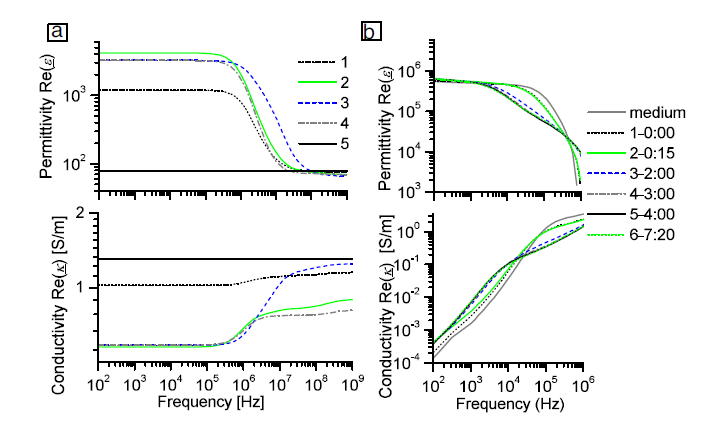
Neutrophil extracellular traps (NETs) are found in vast amounts in inflamed wounds and are therefore a good potential marker for wound infections. NETs are a product of an immune reaction. Their integrant DNA has a certain dielectric behavior due to its charge. This allows a direct electric determination without the need of a transducer. Human neutrophils were used to measure the release of NETs in vitro. However, the structural changes of the cells during this process needs to be taken into account. In this work a model was developed which reflects these changes. This model was compared with impedance measurements. We found that changes in the medium composition strongly modify the dielectric behavior of the system. The most obvious change is caused by the appearance of NETs. These changes remained nearly stable after the cells died and did not undergo more structural changes. Parallel quantification with fluorescence method revealed a nearly linear dependence between NETs and impedance change. The impedance measurement of NETs is a very promising approach to support the diagnosis of inflammation processes especially in wounds.