Reference case

Optical and impedimetric study of genetically modified cells for diclofenac sensing

Category

Application

Bioanalytics

Case summary

At a glance

Cell viability monitoring with the ISX-3

Full reference article

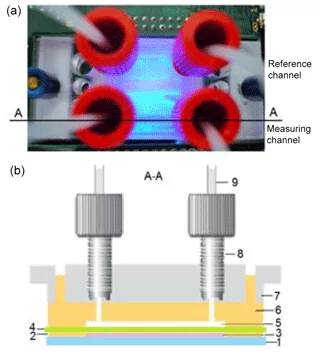
Whole-cell biosensors, based on genetically modified yeast cells, were employed to detect anthropogenic micropollutants (e.g. drugs). Specific stimuli, e.g. traces of drugs, lead to the induction of fluorescence in the respective cells. Receptors of the cells detect specific signal molecules and induce the formation of fluorescent proteins. In this work, genetically modified cells of the yeast Saccharomyces cerevisiae BY4741 were confined in a four-chamber microfluidic cell, providing an optical monitoring of the cell behaviour and their supply with the nutrients. The measurements of the time-dependent fluorescence intensity were performed with different concentrations of the drug diclofenac, and the sensitivity of yeast cells to diclofenac was demonstrated. Cell viability was monitored by simultaneous impedance recording.
In this section

Table of Contents

Reference facts

Application area

Bioanalytics

Category

Published

April 30, 2020

Tags

Key takeaway
Cell viability monitoring with the ISX-3
Related references

You may also like

Bioimpedance as a tool in cardiac resyncronisation therapy

Electrical Impedance to Assess Facial Nerve Proximity During Robotic Cochlear Implantation

Gene-sensor on the Basis of Magnetic Immobilization and Bioimpedance Measurements: a proof of concept

Discuss your application

Want to build something like this?

Talk to our application engineers about scoping a similar setup for your team.

Get in touch with us

Headquarters

Sciospec Scientific Instruments GmbH Leipziger Str. 43b 04828 Bennewitz, Germany

Open in Google Maps

Get in touch with us

We typically reply within one business day.