Case summary
At a glance
Explore next-generation vascular health monitoring and discover how the Sciospec EIT32 is transforming bioimpedance measurements in wearable technology, from real-time vascular monitoring to precise impedance analysis.
Full reference article
The Importance of Measuring Bioimpedance in the Palmar Digital Arteries
Measuring bioimpedance in the palmar digital arteries provides critical insights into vascular health, blood flow, and circulatory function. This innovative approach offers several advantages:
- Non-Invasive Vascular Health Monitoring: The palmar digital arteries reflect microvascular circulation. Tracking their bioimpedance helps assess vascular resistance,blood perfusion and endothelial function without invasive procedures.
- Continuous Physiological Data: Real-time tracking of bioimpedance changes enables early detection of circulatory variations.
- Wearable Design: Seamlessly integrates into daily life, allowing effortless and ongoing monitoring.
- Early Disease Detection: Identifies potential vascular issues before they become critical, aiding in preventive healthcare.
By integrating advanced bioimpedance sensing with a wearable smart ring, this research paves the way for real-time vascular health monitoring in an accessible and non-invasive manner.
Curious to learn more about bioimpedance research ? Check out our detailed FAQ section.
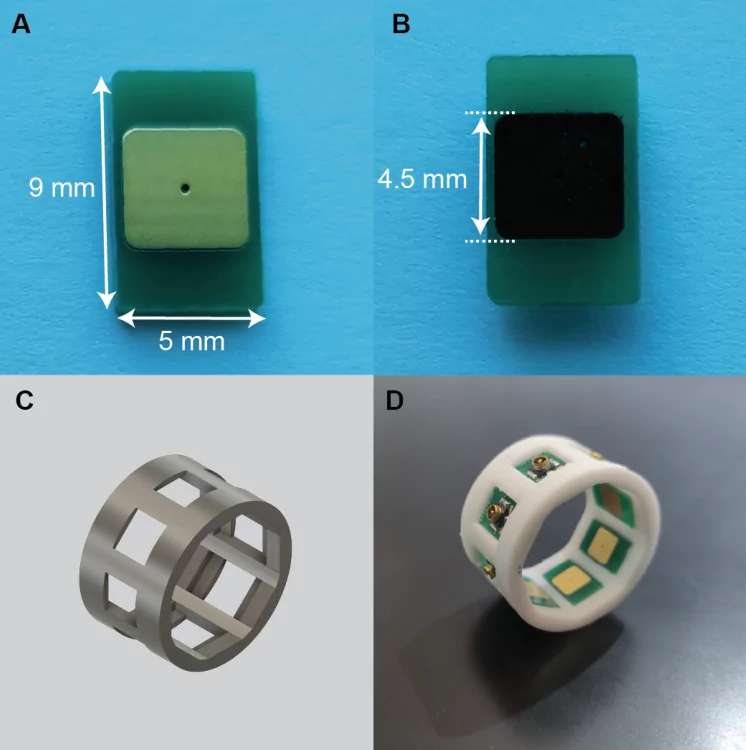
Smart Ring Sensor Designs for Bioimpedance Monitoring
Sciospec’s Contribution to Bioimpedance Research
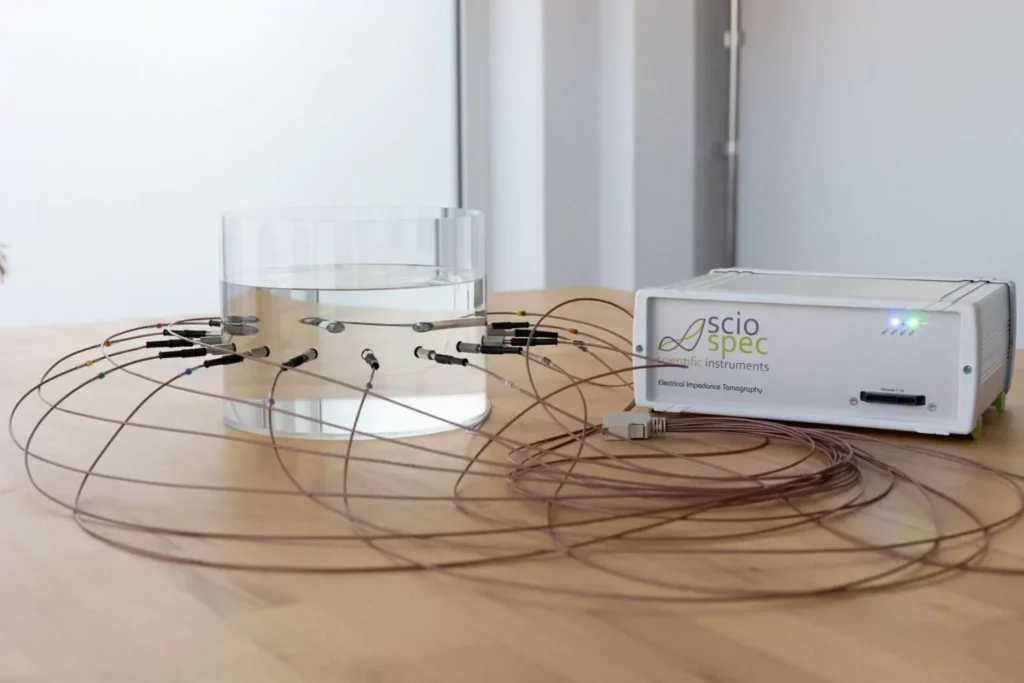
Bioimpedance measurement is at the heart of this innovation, and Sciospec proud to be a leading provider of cutting-edge, adaptable solutions that enables such breakthroughs. Bioimpedance analysis offers a non-invasive method to assess body composition, fluid distribution, and tissue health by measuring the electrical impedance of biological tissues. Accurate impedance measurements are essential for understanding the electrical properties of tissues, which reflect their physiological state.
In this research, the Sciospec EIT32 system, a highly specialized tool, played a critical role in enabling precise bioimpedance analysis, ensuring reliable data collection and interpretation.
Looking for more answers? Keep reading to learn more. We also have a detailed FAQ section further down. Or take the shortcut and directly reach out to us.
What Made This Research Possible?
The researchers aimed to capture subtle, spatially-dependent variations in bioimpedance within the palmar digital arteries to detect pulsatile changes related to blood flow. This is where the Sciospec EIT32, with its multi-channel capabilities, became essential. The EIT32 has the capability to perform Electrical Impedance Tomography (EIT), a technique that creates a cross-sectional image of the electrical conductivity distribution within the finger. While this specific study didn’t create a full tomographic image, the data acquired could be used in future research to generate detailed spatial maps of bioimpedance.
Sciospec’s commitment to providing a flexible and adaptable product platform empowers researchers to explore novel applications of bioimpedance with confidence.
Learn more about our bioimpedance solutions and how they can empower your research and clinical applications.
Elevate Bioimpedance Research with Sciospec EIT32
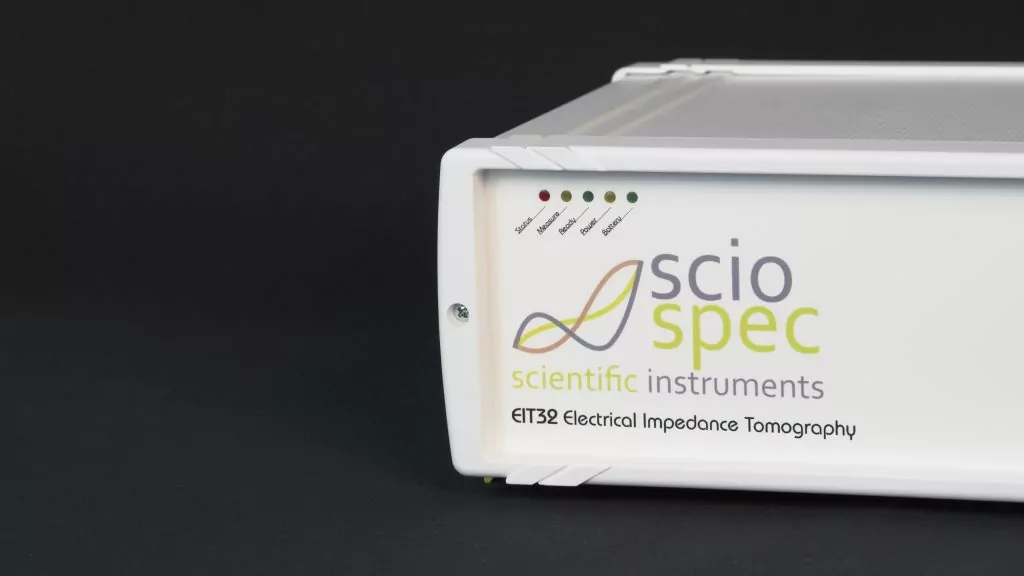
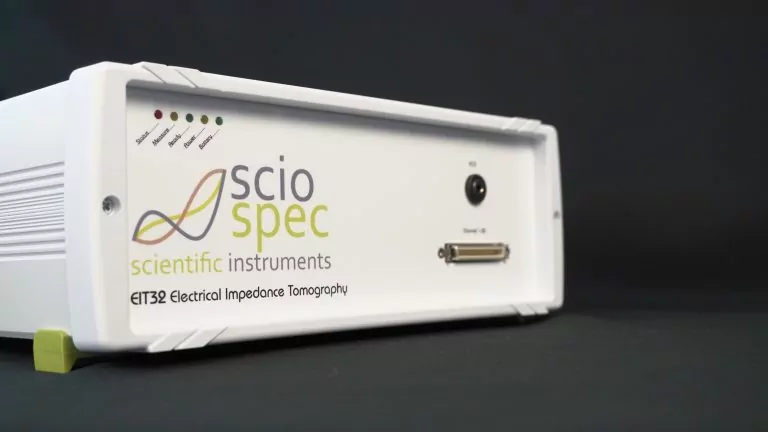
The Sciospec EIT32 system is a trusted solution for advanced impedance measurement, recognized for its precision, adaptability, and ability to drive innovation in bioimpedance research. Its ultra-fast measurement speeds and exceptional accuracy made it an ideal choice for Digital Artery Monitoring and other biomedical applications. It offers a range of features designed to enhance your research capabilities:
- Versatile Frequency Selection
- High-Resolution Measurements
- Effortless Data Acquisition
- Multi-Channel Data Acquisition
- Flexible & Scalable Configurations
Partner with Sciospec to push the boundaries of EIT technology in your research and explore the advantages of the EIT32 system to elevate your work.

Want to dive deeper? Talk to our experts!
The Future of Health Monitoring is Here
The smart ring Bioimpedance study represents a significant step forward in wearable health monitoring technology. By combining innovative sensor design with advanced bioimpedance measurement techniques, researchers are paving the way for a future where personalized and proactive healthcare is readily accessible.
At Sciospec, we are committed to empowering researchers with cutting-edge impedance solutions. Whether you’re developing wearable stress monitors, refining EDA research, or advancing biofeedback therapies, our technology can help.
We invite you to delve deeper into the world of bioimpedance and discover how Sciospec technology can revolutionize your approach to health monitoring.
🚀 Get in touch with Sciospec today to explore how our impedance solutions can power your research. Contact us now.
💡Curious for more? Check out our latest developments and products.
🧪Want to try it yourself? Contact us for more information
🚀Looking for a tailored solution? Our experts can help!
📢 Follow us on LinkedIn for more updates.
#Innovation #Sciospec #ImpedanceTomography #Bioimpedance #SmartRing #WearableSensor #PalmarDigitalArteries
Explore Related Research and Insights
explore by relevant keywords
…or just browse our most recent posts:
Get in touch with us
Frequently asked questions
What is BioZ ?
BioZ is an abbreviation for Bioimpedance. Bioimpedance is a non-invasive technique that measures the electrical impedance of biological tissues. It involves injecting a small, alternating electrical current into the body and measuring the resulting voltage. The impedance (resistance to the flow of electrical current) changes depending on the tissue composition, fluid distribution, and cell structure. This provides valuable information about the physiological state of the tissue.
What is PEDOT, and why is it important for bioimpedance smart ring sensors ?
How does a bioimpedance smart ring measure blood flow/vascular health in my finger ?
The smart ring works by injecting a small, alternating electrical current into the finger and measuring the resulting voltage. Changes in blood flow and vascular health alter the electrical impedance of the tissue. For example, the ring can detect pulsatile bioimpedance changes related to arterial expansion and contraction with each heartbeat. By analyzing these impedance variations, the ring can provide insights into vascular function.
What health conditions can a bioimpedance smart ring potentially detect ?
While still in the research and development phase, a bioimpedance smart ring holds promise for detecting conditions related to cardiovascular health, such as:
- Changes in blood pressure
- Peripheral artery disease
- Overall vascular health
- Continuous monitoring may also aid in personalized fitness tracking and understanding individual physiological responses to exercise or other stimuli.
How accurate is the bioimpedance smart ring compared to other methods ?
The accuracy of the smart ring is an ongoing area of research. The University of Utah study demonstrated the feasibility of detecting pulsatile bioimpedance changes. However, further studies are needed to compare its accuracy against established methods like blood pressure cuffs, ECG, or more invasive vascular assessments. Factors influencing accuracy include electrode design, signal processing techniques, and individual physiological variations.
💡The Sciospec EIT32 system, used in the study, provides highly precise bioimpedance measurements, which are critical for validating the accuracy of the smart ring.
How is the data from a bioimpedance smart ring analyzed and protected ?
Data analysis typically involves signal processing techniques to extract relevant information from the bioimpedance measurements, such as heart rate variability, pulse wave analysis, or other vascular parameters. Data protection is a crucial consideration, and manufacturers must adhere to privacy regulations to ensure user data is securely stored and transmitted. Encryption, secure cloud storage, and anonymization techniques are commonly employed to protect sensitive health information.