Case summary
At a glance
See how the EIT32 shapes next-generation Electrical impedance imaging
Full reference article
Why This Research Matters: Tackling the Core Challenges of Electrical Impedance Imaging
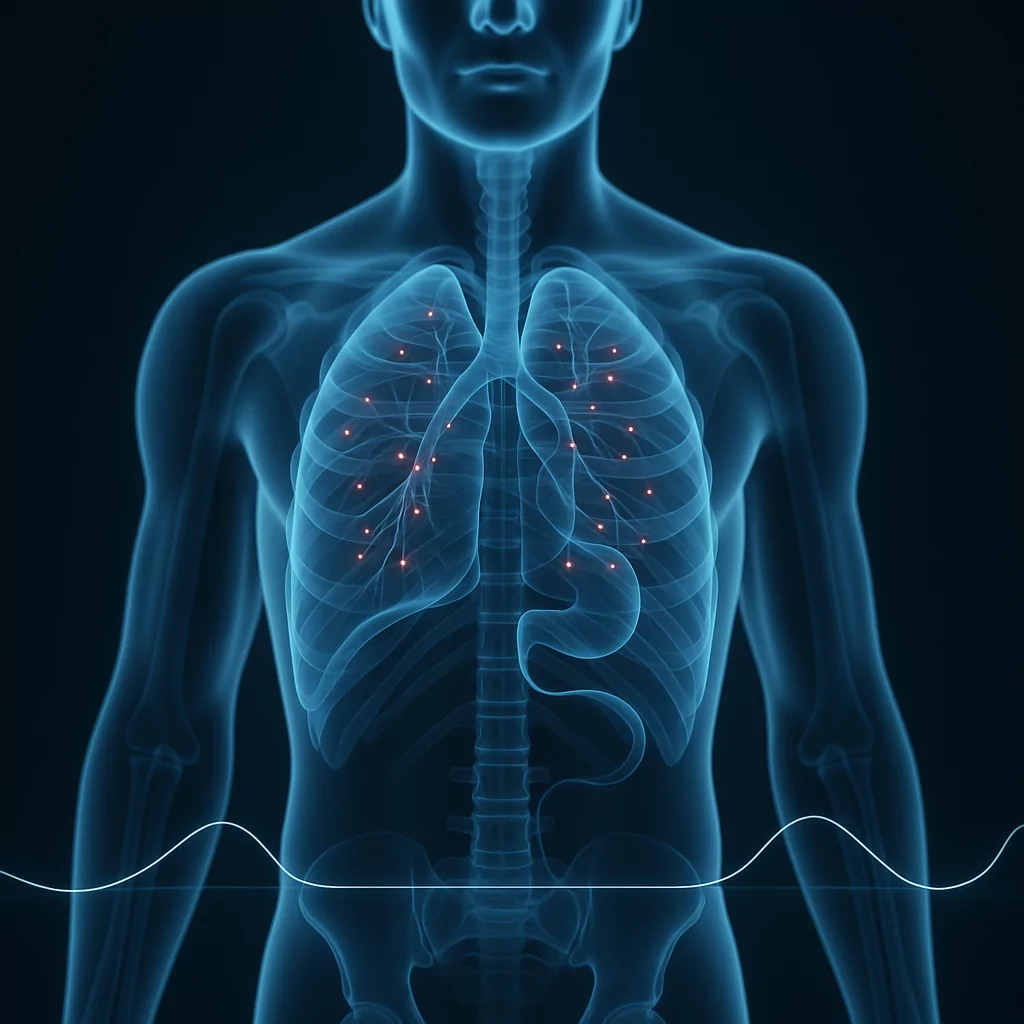
Electrical impedance imaging is a powerful radiation-free imaging method with the potential to transform areas like lung ventilation monitoring. However, it comes with a unique computational challenge: the inverse problem of estimating internal conductivity from surface voltage measurements is nonlinear ill-posed, and highly sensitive to noise.
The SRL-EII solver effectively addresses this by:
- Using a modular approach to better isolate and manage reconstruction steps.
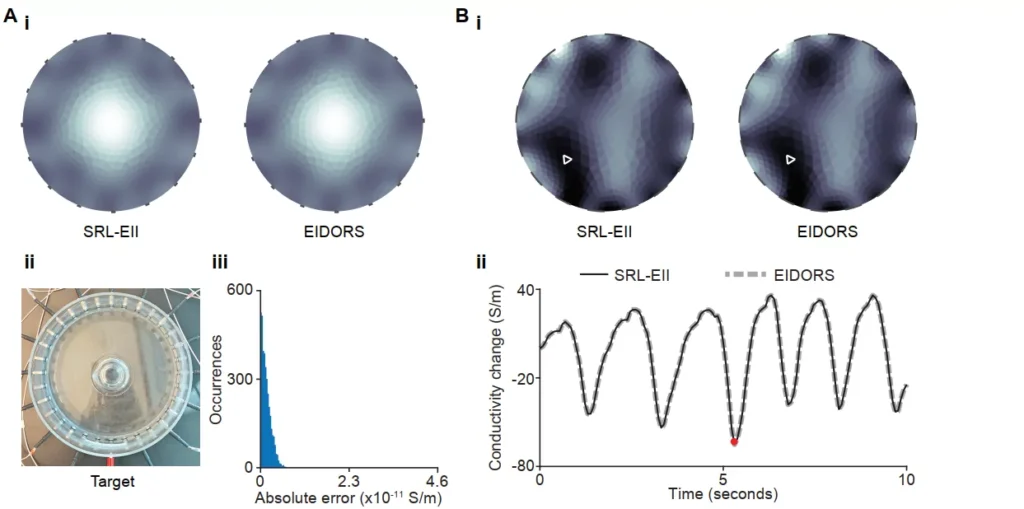
- Validating results through comparison with the well-known EIDORS algorithm showing near-identical results but with improved flexibility and speed.
- Enabling real-time imaging with the reconstruction of neonatal lung frames
This achievement illustrates the critical importance of precise data which made possible by Sciospec’s hardware.
Looking for more answers about tackling EII challenges? Keep Redaring or take a shortcut and ask us directly
Sciospec’s Contribution: Where Precision Meets Flexibility
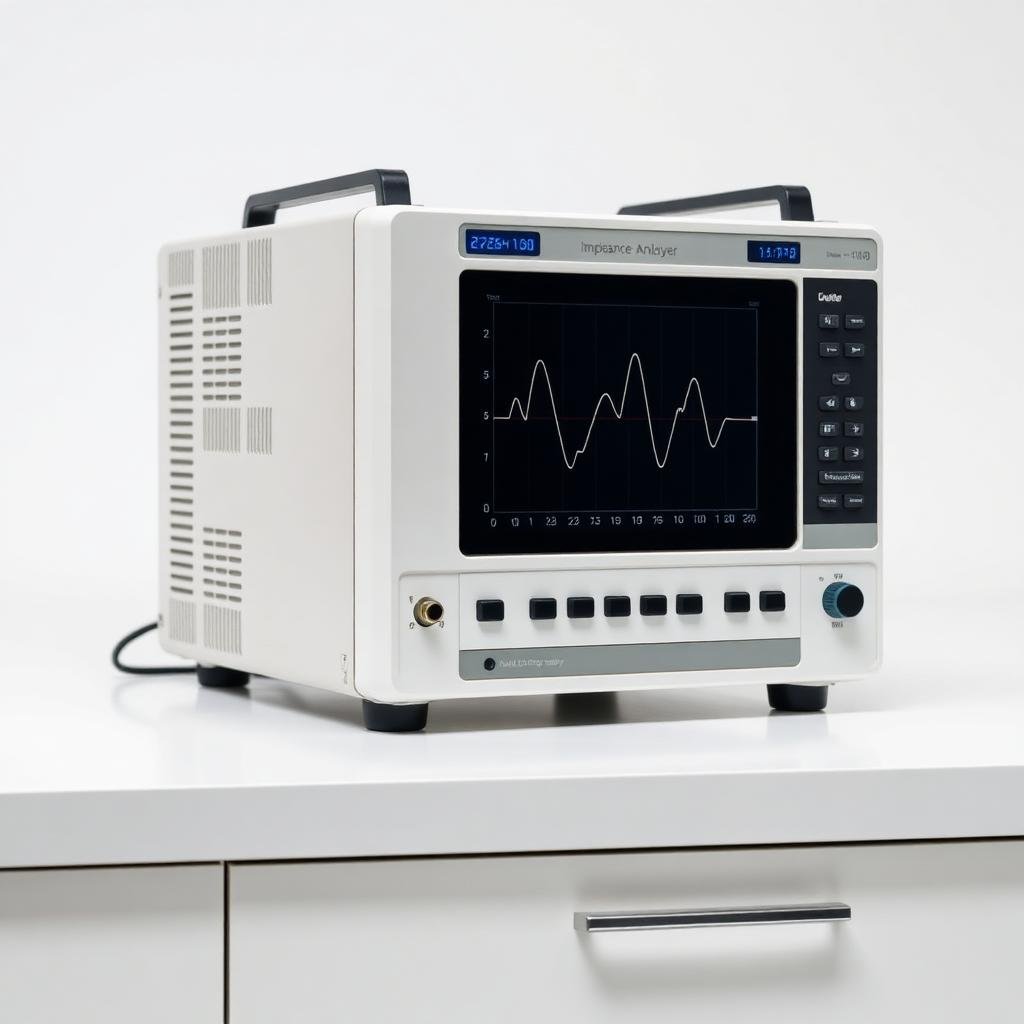
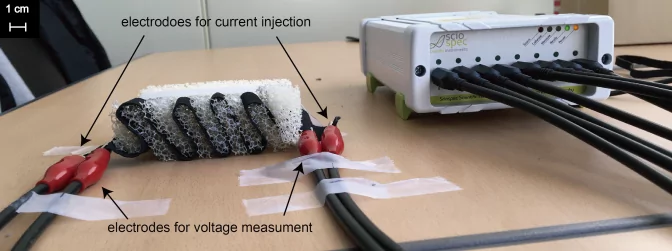
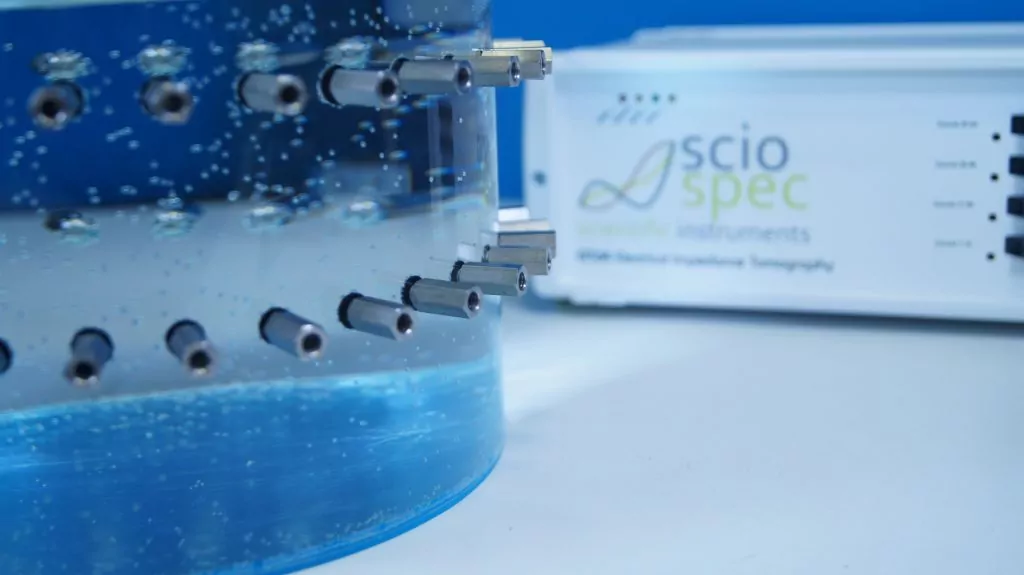
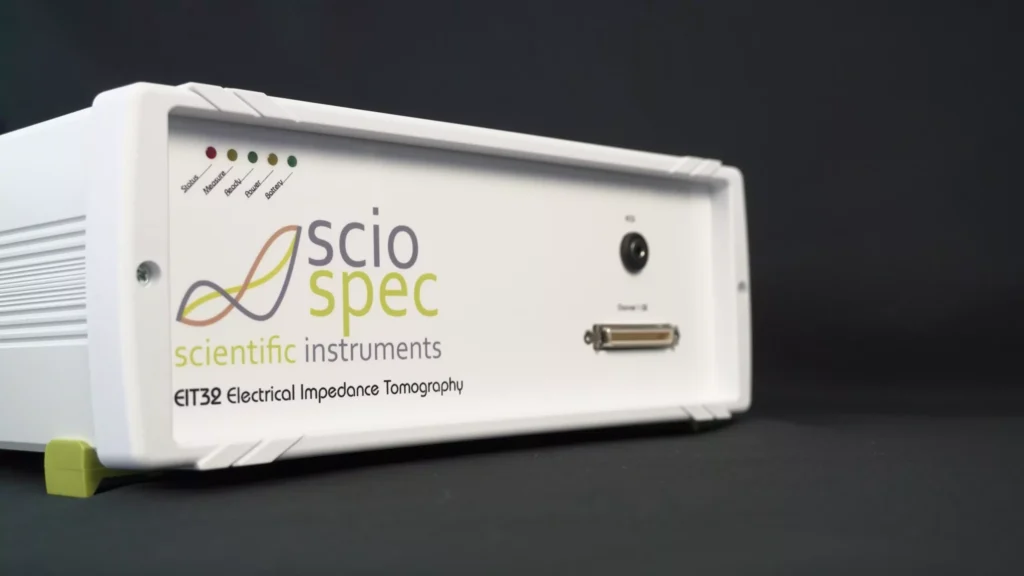
At the heart of the experimental validation was Sciospec’s EIT32 system, which provided the high-fidelity voltage measurements required for the SRL-EII solver to operate effectively.
Some of the key features that made the Sciospec EIT32 essential to this study include:
- Exceptional data accuracy : A 16-electrode configuration combined with coaxial cabling minimized noise and maximized signal quality achieving the ultra-low error margins reported in the study.
- Versatile measurement support : The EIT32 easily handled both adjacent and opposite electrode injection patterns, adapting perfectly to the dual-mesh reconstruction strategy used by the researchers.
- Seamless integration with custom algorithms : Designed with research in mind allowing smooth implementation of experimental codebases like SRL-EII.
In essence, the EIT32 system served not merely as a measurement tool, but as a critical enabler of this innovation process. Its seamless integration into the experimental workflow highlights how advanced impedance tomography systems can accelerate progress in electrical impedance imaging from data acquisition to high-precision computational modelling
Looking for more answers? Check out our detailed FAQ section further down see how modular EIT solutions are transforming real-time imaging.
How Sciospec’s EIT32 Powers Advanced Research in Medical Imaging
The EIT32 system’s design directly supported the high performance and accuracy demonstrated in the SRL-EII solver. These standout features made it a critical enabler for the research:
What Researchers Gain with the EIT32 System
🔬 Real-time Imaging Performance : Capture high-speed physiological dynamics with synchronized switching and true parallel measurements.
📐 Flexible Experimentation : Use one platform for adjacent and opposite current injection setups; ideal for custom algorithm development.
🔍 High-Fidelity Data : Ensure minimal noise with coaxial cabling and ultra-precise voltage acquisition.
⚙️ Integrated Tools for EIT Development : Includes software for real-time reconstruction and compatibility with open-source packages like EIDORS.
The EIT32 system’s performance in this SRL-EII study is a clear demonstration of how thoughtful hardware design can accelerate innovation in electrical impedance imaging. With its unique combination of speed, precision, and flexibility, the EIT32 doesn’t just meet the technical requirements of advanced EIT research but it actively expands what’s possible.
Whether you’re developing advanced algorithms, monitoring physiological processes in real time, or prototyping next-generation diagnostic tools, this platform is ready to support your success.
👉 Learn more about the advantages of the EIT32 and how it can elevate your research or product development.
Beyond EIT32: Scalable Systems for Evolving Research and Clinical Demands
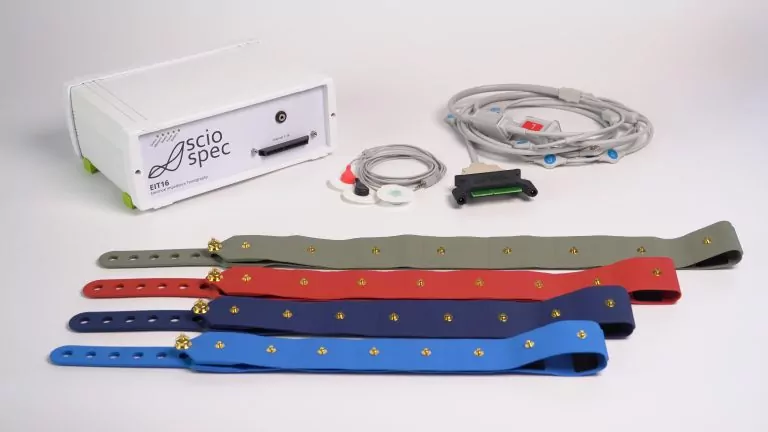
While the EIT32 served as the foundation for this study, Sciospec’s EIT platform is built for seamless scalability, empowering users to start small and expand as their research demands evolve. Whether you begin with a compact phantom setup or a basic tank experiment, our modular system architecture allows for effortless scaling. Entry-level models like the cost-efficient EIT16 are ideal for focused, small-scale studies. As your needs grow, higher-channel systems such as the EIT64 and EIT128 step in to provide enhanced resolution and coverage suitable for more complex applications including clinical lung and cardiac monitoring, or even industrial process control. At the peak of performance, the EIT256 offers unmatched electrode density and measurement precision for the most demanding research.
But when it comes to lung imaging, scalability isn’t the only need ease of entry, safety, and clinical readiness are just as crucial. That’s where the LungEIT Kit comes in: a dedicated, ready-to-use bundle tailored for researchers entering the world of pulmonary imaging on human test subjects.
But when it comes to lung imaging, scalability isn’t the only need ease of entry, safety, and clinical readiness are just as crucial. That’s where the LungEIT Kit comes in: a dedicated, ready-to-use bundle tailored for researchers entering the world of pulmonary imaging on human test subjects.
Medical-grade safety features (IEC60601-1 compliant) for human subject research
Complete cabling and electrode belts for immediate, hassle-free setup
Dedicated lung imaging app integrated in the software suite
Full access to raw data customizable injection patterns and measurement parameters
EIDORS compatibility and open interfaces for application development and integration
Optional add-ons like ECG synchronization and isolated I/Os for external sensors/devices
With the LungEIT Kit, you get the flexibility of a research system combined with the clinical readiness of a medical-grade device, the ideal starting point for innovation in lung imaging.
⚙️ Looking to scale or customize? Explore the full range of Sciospec EIT solutions

Want to dive deeper? Talk to our experts!
Our experts are ready to help you understanding how this technology works and how you can apply and integrate it into your work. Get in touch today to get a personalized consultation to enhance your work with our advanced solutions
Empowering the Future of Electrical Impedance Imaging
The SRL-EII solver represents a major step forward in real-time image reconstruction and it’s made possible by the precision and performance of Sciospec’s EIT32. This collaboration between advanced algorithms and high-quality measurement systems underscores the power of integrated innovation in medical imaging.
As impedance imaging moves toward broader clinical adoption and industrial application, Sciospec’s suite of scalable, modular EIT systems from EIT16 to EIT256 offers the tools to support every stage of development.
🚀 Get in touch with Sciospec today to explore how our impedance solutions can power your research. Contact us now.
📩 Contact us to configure your custom setup from early research to scalable OEM solutions
💡Curious for more? Check out our latest developments and products.
🧪Want to try it yourself? Contact us for more information
🚀Looking for a tailored solution? Our experts can help!
📢 Follow us on LinkedIn for more updates.
#Innovation #Sciospec #ImpedanceTomography #ElectricalImpedanceImaging #Real-timeimaging #SRL-EIIsolver
Explore Related Research and Insights
explore by relevant keywords
…or just browse our most recent posts:
Get in touch with us
Frequently asked questions
1. What is Electrical Impedance Imaging (EII) ?
Electrical Impedance Imaging (EII) is an evolving, non-invasive imaging technique that enables real-time visualization of physiological processes. It works by injecting small electrical currents through surface electrodes and measuring the resulting voltages to reconstruct images of the body’s internal conductivity. This method is particularly useful for monitoring functions such as lung ventilation and cardiac activity in real time.
2. What is the SRL-EII solver ?
The SRL-EII solver is a modular and efficient numerical algorithm designed to address the inverse problem in Electrical Impedance Imaging. It aims to improve the speed and flexibility of image reconstruction, facilitating real-time imaging applications.
3. How does EII differ from other imaging modalities like CT or MRI ?
Unlike CT or MRI, EII does not use ionizing radiation or strong magnetic fields. It offers real-time imaging capabilities with high temporal resolution, making it suitable for continuous monitoring. However, EII generally has lower spatial resolution compared to CT or MRI.
4. What are the primary applications of EII ?
EII is primarily used in medical settings for monitoring lung function, detecting pulmonary embolisms, and assessing cardiac activity. It’s also explored in brain imaging and has potential applications in industrial process monitoring.
5. What challenges are associated with EII ?
One of the main challenges in EII is solving the inverse problem, which involves reconstructing internal conductivity distributions from surface measurements. This problem is nonlinear and ill-posed, making it sensitive to measurement noise and requiring sophisticated algorithms for accurate image reconstruction.
6. How does the SRL-EII solver improve EII image reconstruction ?
The SRL-EII solver introduces a modular approach to the reconstruction process, allowing for better isolation and management of different computational steps. This modularity enhances flexibility and can lead to faster and more accurate image reconstructions compared to traditional methods.
7. Are there open-source tools available for EII image reconstruction ?
Yes, EIDORS is an open-source software toolbox designed for image reconstruction in Electrical Impedance Tomography (EIT), which is closely related to EII. It provides a range of algorithms and tools for researchers and practitioners working in this field.