Case summary
At a glance
Unlock the potential of Electrical Impedance Tomography in strain sensing with the ISX-3 EIT, designed for precision, scalability, and advanced analysis.
Full reference article
Innovative Approaches to High-Resolution and Flexible Stretchable Sensors
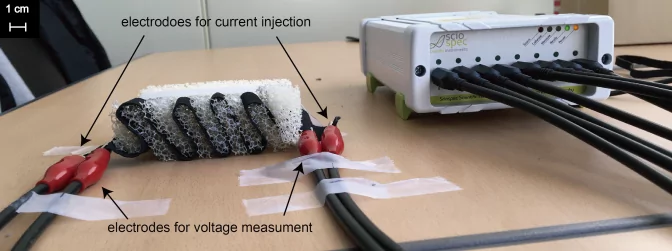
In a recent study, researchers successfully navigated the challenges of achieving both high spatial resolution and flexibility in stretchable sensors by creating two novel sensor designs: an EIT-based system and a grid-based system. The EIT system effectively utilized boundary electrodes to generate high-resolution strain maps via impedance tomography, while the grid system streamlined data acquisition but necessitated advanced multiplexing to reduce crosstalk.
The Sciospec ISX-3 EIT system played a crucial role in this research, providing a robust platform for acquiring the necessary high-quality impedance measurements that underpinned both approaches.
📌 Interested in learning more about stretchable strain sensors and their importance? Explore our FAQ section below for additional insights
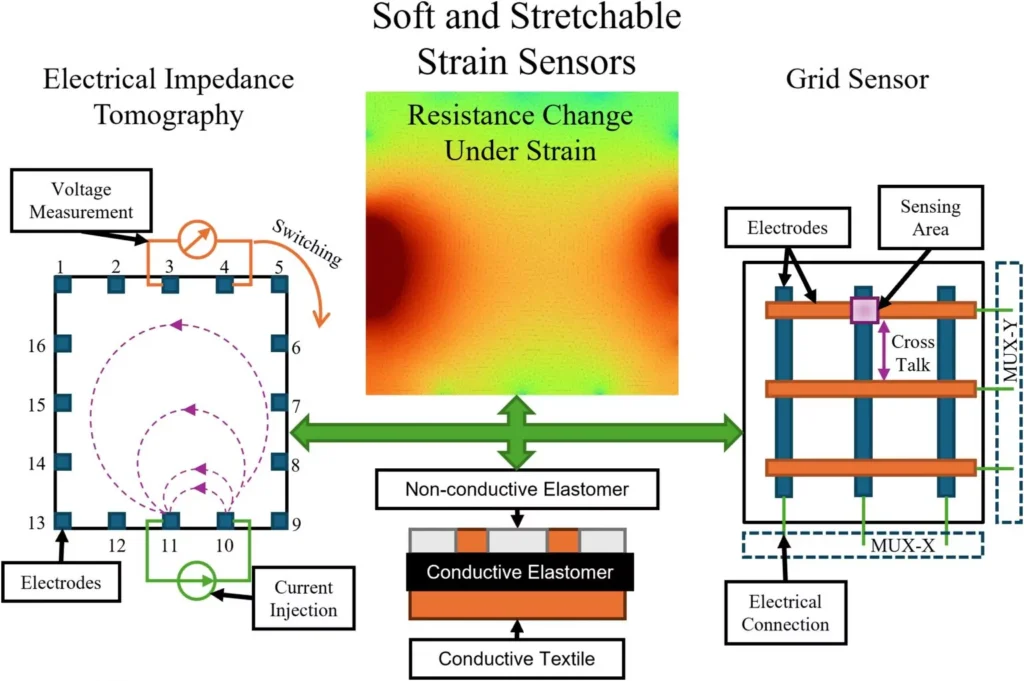
EIT-based and grid-based strain sensors for high-resolution and flexible sensing.
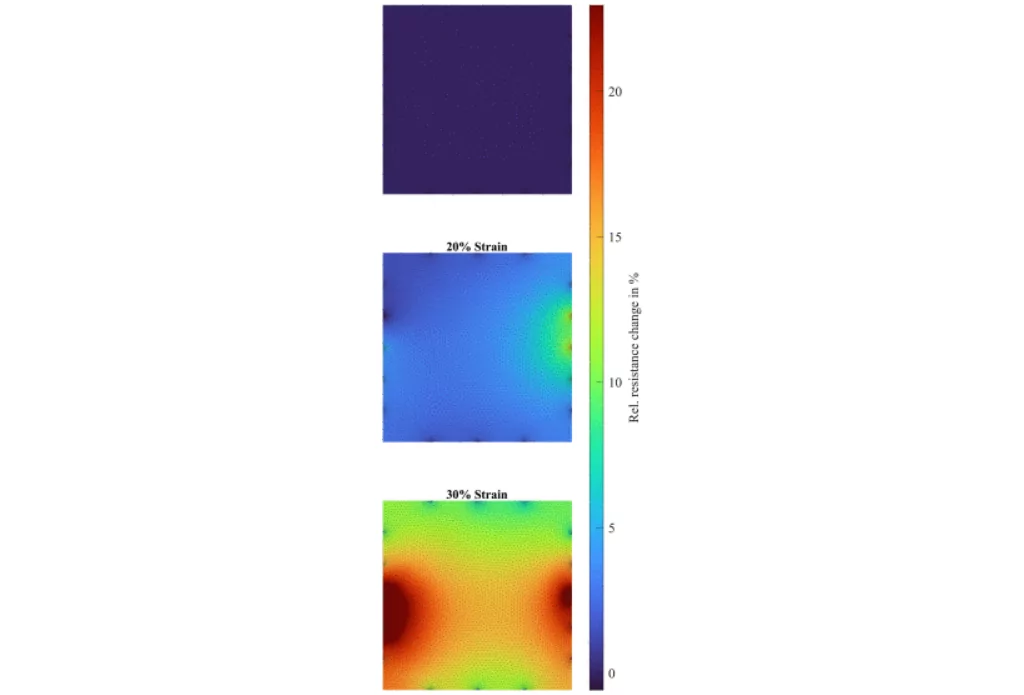
Heatmaps illustrate resistance variations at 0%, 20%, and 30% strain, demonstrating EIT’s capability to capture detailed strain distribution.
Advantagess of EIT in Stretchable Sensor Development
- Minimal Electrodes, Maximum Resolution: 16 electrodes achieved detailed strain maps, reducing wiring complexity.
- Robustness to Deformation: Unlike rigid grids, EIT accommodates non-uniform stretching (e.g., human motion).
- Empowering Research with EIT Technology: Sciospec provides the EIT technology that enables researchers to explore new other frontiers
🚀 Take your research to the next level with Sciospec’s high-performance EIT systems. Keep reading to learn more Or take the shortcut and directly reach out to us.
Sciospec’s Contribution: Precision Meets Flexibility
How is this made possible?
- Advanced impedance analysis: The ISX-3 EIT is equipped with a high-performance electrical impedance analyzer and providing unparalleled flexibility in designing injection and measurement protocols.
- High-speed data acquisition: The system conducts impedance measurements at a frequency of 1 kHz, driven by a 20 µA current injection, ensuring dependable, real-time collection of strain data.
- Optimized measurement efficiency: A single frame acquisition is completed in just 830 ms for the EIT setup, significantly reducing the influence of resistance relaxation effects compared to the 1600 ms needed for the grid-based approach.
In this research, the ISX-3 EIT enables resolving even subtle resistance changes in the conductive elastomer, enhancing the accuracy of strain mapping.
📌 Want to learn more about how the ISX-3 EIT system can elevate your research? Discover the ISX-3 EIT’s capabilities
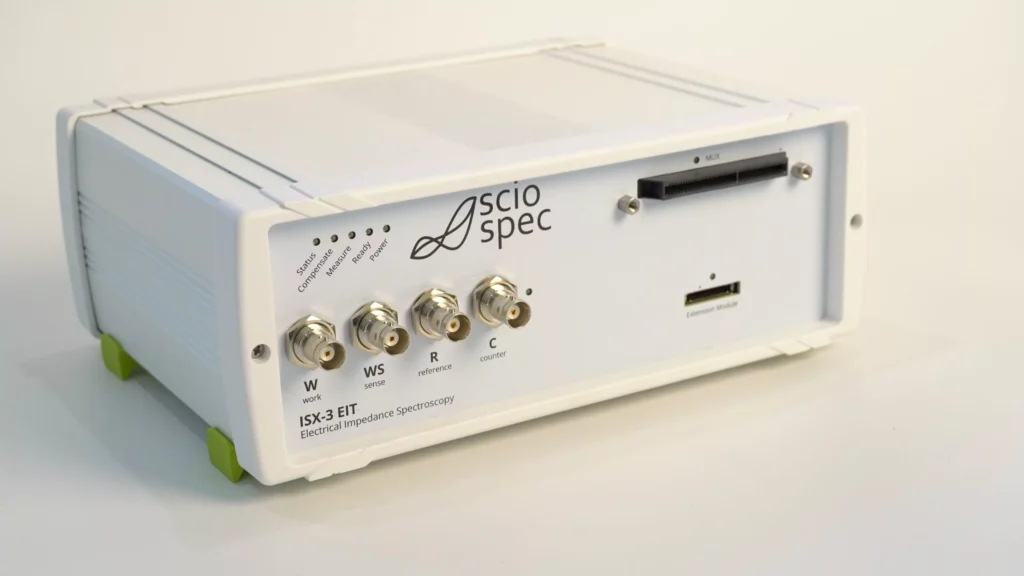
Choosing the Right EIT System: ISX-3 vs. Dedicated EIT Machines
The Sciospec ISX-3 EIT system provides unparalleled precision and flexibility, making EIT imaging available across extremely large frequency (100 mHz – 10 MHz) and impedance ranges with unmatched accuracy. This capability is ideal for applications requiring fine-grained impedance mapping, such as material characterization and high-precision strain sensing.
However, this broad measurement range comes at the expense of frame rate. For high-speed dynamic applications—where real-time imaging at 100 fps or higher is required—Sciospec offers dedicated EIT systems that are optimized for rapid data acquisition and high-frame-rate imaging.
✔ Use the ISX-3 EIT when: You need maximum precision, broad frequency range, and high impedance resolution for detailed material or strain analysis.
✔ Use a dedicated EIT system when: You require high-speed imaging, such as real-time biomedical monitoring or soft robotics applications with fast deformation tracking.
🚀Not sure which system fits your needs? Contact our experts to explore the best EIT solution for your research.
Scalability with High-Performance Multiplexers
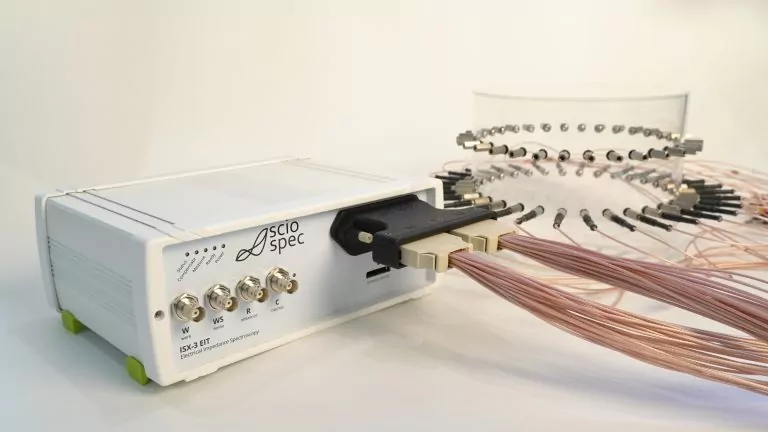
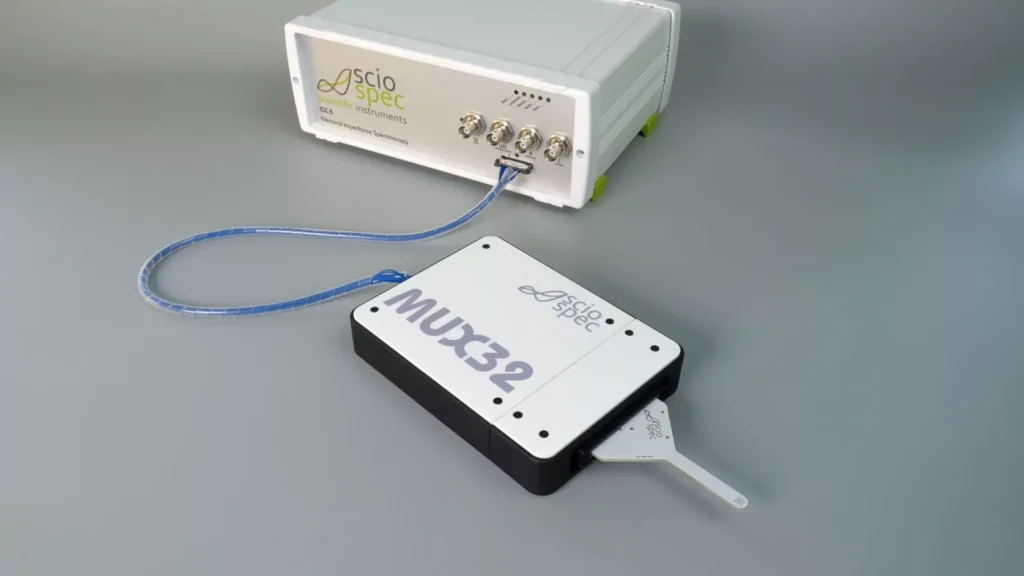
For applications requiring more measurement channels, the Sciospec ISX-3 EIT offers a highly flexible any-to-any multiplexer with 32 or 64 ports. This allows seamless expansion, making it an ideal choice for large-scale impedance measurements and high-density sensor arrays. To ensure optimal performance and reliability, Sciospec provides high-quality multiplexers that are specifically designed to work efficiently with the ISX-3 EIT. By integrating these advanced multiplexers, users can enhance measurement accuracy, streamline data acquisition, and maintain the system’s high precision across multiple channels.
📌 Discover more about scalable impedance solutions with the Sciospec ISX-3 EIT
Why Choose the ISX-3 EIT for Advanced Strain Sensing?
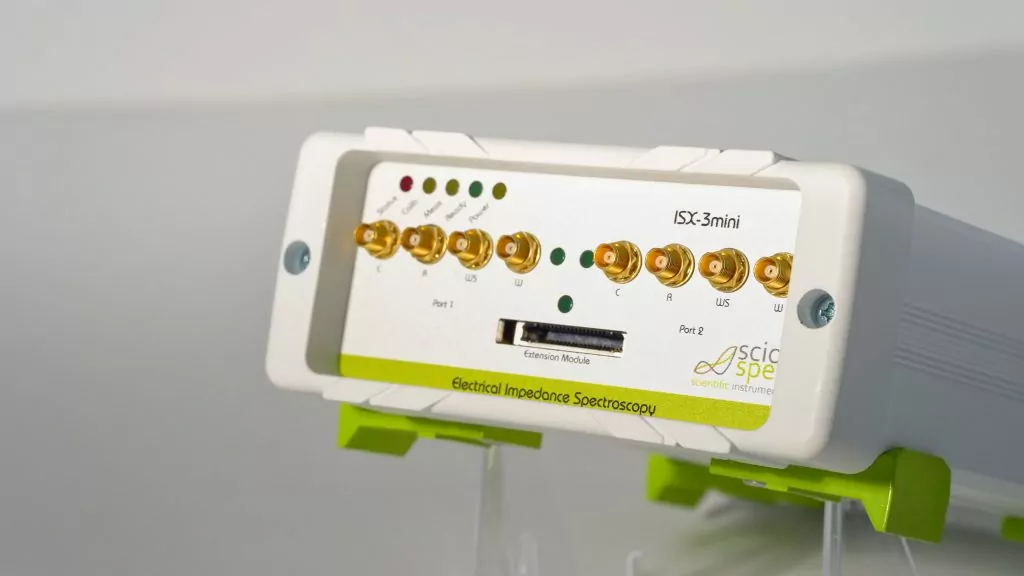
The Sciospec ISX-3 EITsystem integrates Electrical Impedance Spectroscopy (EIS) and Electrical Impedance Tomography (EIT) in one powerful platform, making it ideal for researchers and industrial users requiring both capabilities. With its high-precision impedance analysis, scalable electrode configurations, the ISX-3 EIT offers unmatched flexibility for strain sensing applications.
The Key advantages include:
✔ High-resolution measurements – Supports up to 2048 frequencies per sweep with a 0.01% base precision for accurate impedance mapping.
✔ Versatile electrode configurations – Compatible with 2, 3, and 4-electrode setups, allowing adaptation to various sensing requirements.
✔ Real-time data processing – Includes Sciospec’s software suite for advanced control, visualization, and analysis

Want to dive deeper? Talk to our experts!
Our experts are ready to help you understanding how this technology works and how you can apply and integrate it into your work. Get in touch today to get a personalized consultation to enhance your work with our advanced solutions
Step into the Future with Impedance based Advanced Strain Sensing
The fusion of stretchable materials and advanced impedance measurement is redefining sensor capabilities. As this study shows, Sciospec’s EIT systems are not just tools but enablers of innovation, providing the speed, precision, and flexibility needed to turn theoretical designs into real-world solutions.
Explore Further:
- Dive into the ISX-3 EIT’s specifications.
- See how impedance tomography is fueling breakthroughs across various applications—check out our related articles to dive deeper into the latest developments.
🚀 Get in touch with Sciospec today to explore how our impedance solutions can power your research. Contact us now.
💡Curious for more? Check out our latest developments and products.
🧪Want to try it yourself? Contact us for more information
🚀Looking for a tailored solution? Our experts can help!
📢 Follow us on LinkedIn for more updates.
#Innovation #Sciospec #ImpedanceTomography #StretchableStrainSensors #Grid-BasedSoftSensors #SoftRoboticsSensors
Explore Related Research and Insights
explore by relevant keywords
…or just browse our most recent posts:
Get in touch with us
Frequently asked questions
What are stretchable strain sensors, and why are they important ?
Stretchable strain sensors are devices designed to measure deformation or strain while being able to stretch and conform to curved or flexible surfaces. They are important because they enable new applications in wearable technology, soft robotics, healthcare monitoring, and human-machine interfaces, where traditional rigid sensors cannot be used.
What are some of the challenges in designing effective stretchable strain sensors ?
- Achieving high sensitivity and accuracy while maintaining stretchability.
- Minimizing the impact of the sensor on the mechanical properties of the material being measured.
- Ensuring long-term stability and durability under repeated stretching and bending.
- Developing cost-effective and scalable manufacturing methods.
- Reducing signal noise from cross-talk between electrodes
What materials are commonly used to create stretchable strain sensors ?
Common materials include:
- Elastomers (such as silicones and polyurethanes) to provide stretchability.
- Conductive fillers (such as carbon black, carbon nanotubes, silver nanowires, and conductive polymers) to enable strain-dependent electrical conductivity.
- Conductive textiles and stretchable electrodes for connecting the sensor to measurement electronics.
How can spatially resolved strain sensing improve soft robotics and wearable technologies ?
Spatially resolved strain sensing allows for a more detailed understanding of deformation patterns, enabling:
- More precise control of soft robots through feedback from multiple sensing points.
- Enhanced gesture recognition and motion tracking in wearable devices.
- Improved monitoring of joint movement and muscle activity in healthcare applications.
- Better understanding of the mechanical behavior of soft materials.
What are the limitations of grid-based soft sensors for strain sensing ?
What are the key performance metrics for evaluating stretchable strain sensors ?
Key metrics include:
- Sensitivity (Gauge Factor): How much the sensor’s resistance changes per unit of strain.
- Linearity: How linear the relationship is between strain and resistance change.
- Hysteresis: The difference in output for a given strain value depending on whether the strain is increasing or decreasing.
- Stretchability: The maximum strain the sensor can withstand without failure.
- Durability: The number of stretch-release cycles the sensor can endure before performance degrades.
- Response Time: How quickly the sensor responds to changes in strain.
What is the Volume of Tissue Activated (VTA) and why is it important ?
How does impedance spectroscopy contribute to wearable stress monitoring?
Wearable devices require precise, real-time EDA tracking to provide meaningful insights into stress, emotions, and mental well-being. Multi-frequency impedance measurement enables:
✔ More accurate stress quantification in real-world settings
✔ Differentiation between emotional responses & external factors
✔ Continuous monitoring for long-term mental health applications
💡 Sciospec’s ISX-3 is designed to support advanced impedance measurement in wearable research and stress monitoring applications.