
Case summary
At a glance
Learn how the ISX-3 integrates with lab-on-chip platforms and wearable sensors to bring high-resolution, scalable sweat analysis from the lab to real-world use.
Full reference article
Enabling Personalized Healthcare Through Sweat Analysis
Sweat is rich in biochemical markers like chloride and lactate, which can indicate hydration status, fatigue, cystic fibrosis, and other conditions. Because it can be collected non-invasively and continuously, it holds immense promise for remote and wearable health monitoring.
Unlike traditional sensing methods that rely on optical or chemical processes, impedance spectroscopy offers a purely electrical, label-free solution. This minimizes complexity and enables real-time, on-site analysis, perfect for mobile health applications.
👉 Looking for more answers? Check out our detailed FAQ section. to find more answers to the most common questions about sweat analysis, impedance spectroscopy, and more.
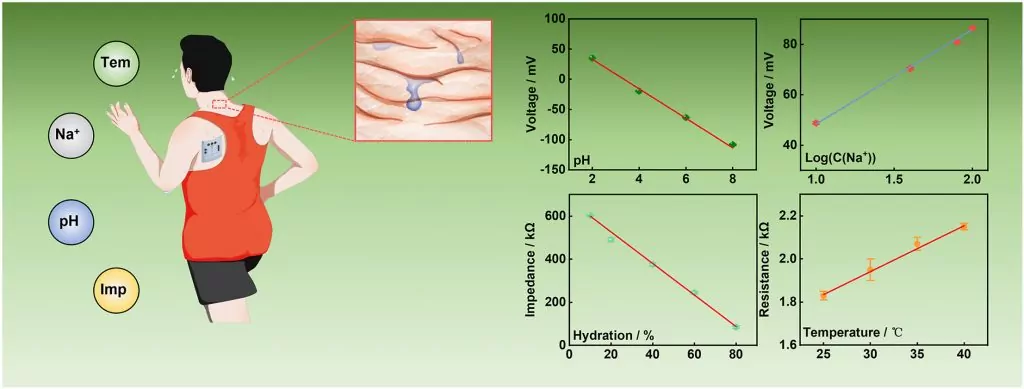
Wearable Sweat Sensor for Real-Time Health Monitoring
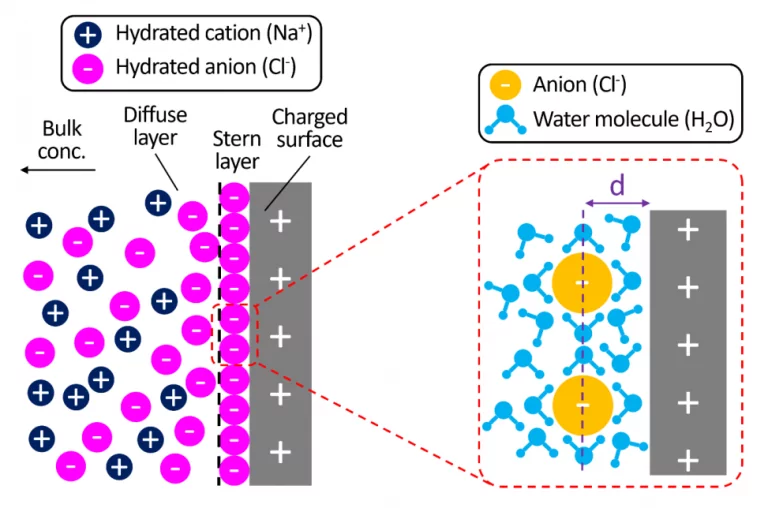
What the Study Did and Why It Matters ?
In pursuit of a fast, low-cost, and reliable method for biofluid analysis, researchers developed a microfluidic impedance spectroscopy approach to monitor key ions in sweat. Their work focused on enabling accurate detection of both cationic and anionic species, all without interference from neutral compounds. A key insight from the study was the influence of temperature fluctuations on impedance readings. Since wearable health devices often operate in variable thermal environments, understanding and compensating for these temperature effects is critical for maintaining measurement accuracy.
Sciospec’s ISX-3 impedance analyzer played a crucial role in supporting this research, delivering the precision and flexibility needed for real-time measurements in a compact, scalable setup.
Curious how it works in practice? Keep reading to learn more.We also have a detailed FAQ section further down. Or take the shortcut and directly reach out to us.
Sciospec’s Contribution: Real-World Accuracy in Biofluid Sensing
At the heart of this study’s success was the Sciospec ISX-3 impedance analyzer, chosen for its precision and adaptability. The ISX-3 enabled:
- High-resolution impedance measurements across a wide frequency spectrum.
- Real-time data acquisition for capturing dynamic ionic responses under temperature variation.
- Flexible electrode support facilitating seamless integration with microfluidic systems.
🌡️ Temperature Matters in Wearable Sensing
Sweat-sensing devices worn close to the skin are naturally exposed to temperature changes from body heat, environmental conditions or physical activity. The study showed that such fluctuations significantly influence impedance spectra, which in turn affects the accuracy of ion concentration measurements. With its real-time precision, the ISX-3 enabled researchers to capture these temperature-driven changes in impedance, allowing for accurate calibration and compensation. This highlights the importance of temperature-aware sensing in wearable health monitoring systems ensuring that diagnostics remain reliable even in dynamically changing conditions.
Thanks to these capabilities, researchers were able to validate their system under realistic conditions bridging the gap between prototype and deployable health tech.
Curious how the ISX-3 empowers next-generation health monitoring? Click to learn more to see how the ISX-3 supports advanced biofluid sensing and its role in wearable health monitoring
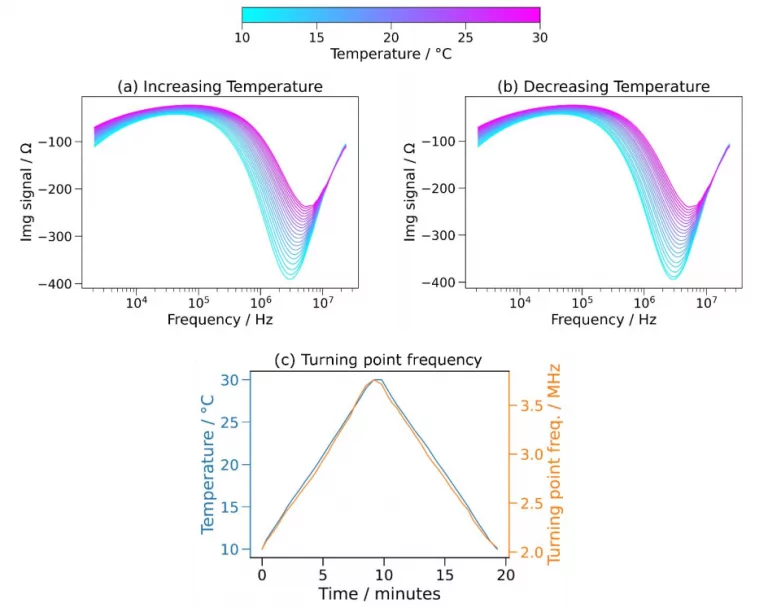
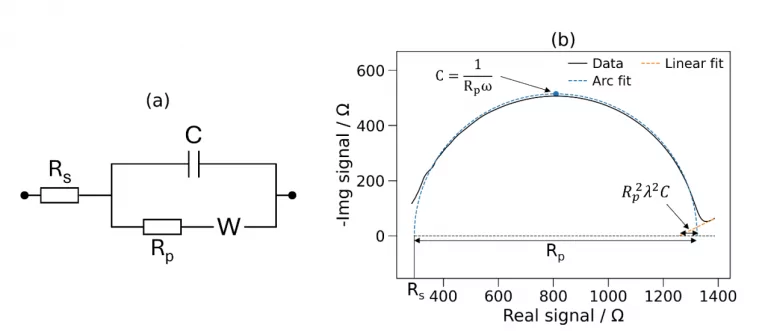
Comparison of binary impedance and turning point frequency (TPF) of a 2 mM NaCl solution with increasing and decreasing temperature.
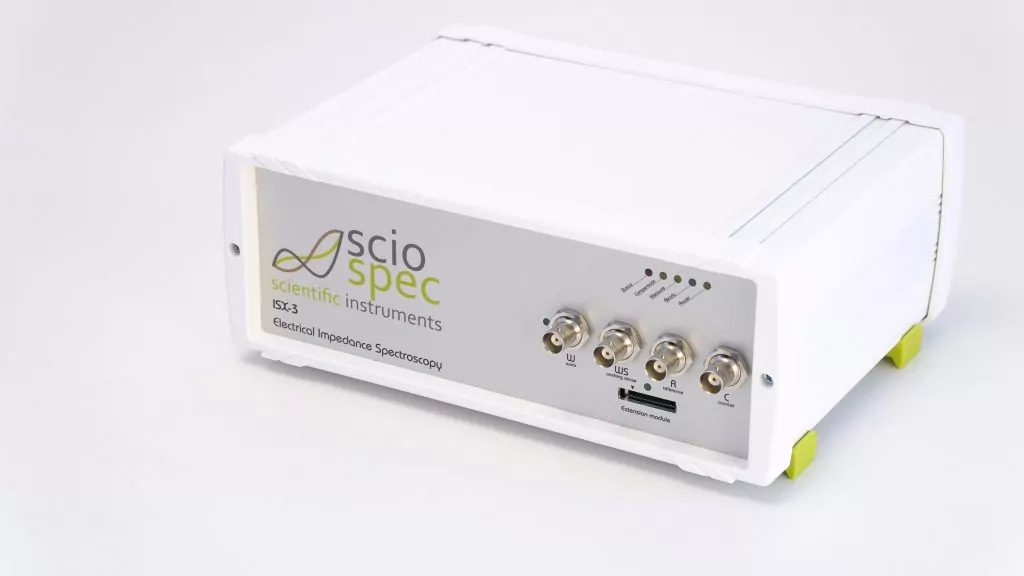
Why the ISX-3 Is Ideal for Remote Biofluid Monitoring
The ISX-3 is purpose-built for applications where detail, speed, and integration matter making it a perfect match for advanced health diagnostics. Here’s what makes it stand out:
- 🔬 Detect Subtle Ionic Shifts Sensitive enough to catch early changes in health indicators or biomarkers, thanks to high-precision impedance measurement capabilities.
- 📈Wide Frequency RangeSpanning from 100 µHz to 100 MHz, it captures a broad spectrum of impedance behaviour which is ideal for resolving distinct signatures of multiple biomarkers.
- ⚡Fast ReadoutReal-time feedback accelerates iterative testing and ensures timely responses, essential for temperature-sensitive or wearable applications.
- 🔄Compact & Modular Design Designed for seamless integration with microfluidic systems and wearable electronics, and compatible with 2-, 3-, and 4-electrode configurations.
- 🔍Customize Your Experimental Setup Flexible modular configurations make it easy to adapt the ISX-3 to different research needs, whether it’s for a lab prototype or a field-deployable system.
Whether you’re designing a next-gen biosensor or scaling a health monitoring platform, the ISX-3 delivers the performance and versatility to make your vision a reality.
👉 Want to dive deeper into what makes the ISX-3 stand out?
Read more about its key advantages and how it can support your next innovation.
Expanding Microfluidic Impedance Applications with Scalable, Modular Technology
As remote health monitoring evolves the need for systems that can adapt and scale with growing demands. The Sciospec ISX-3, combined with our modular multiplexer solutions, provides the flexibility to expand sweat-based diagnostic setups from simple single-channel measurements to multi-site, high-throughput sensing platforms.
In the context of this research , it’s clear that simultaneous monitoring of multiple biomarkers across different body sites can offer a more complete picture of a person’s health status. For example:
- Multiple skin site monitoring: enables better mapping of hydration or electrolyte changes across the body.
- Parallel detection of biomarkers: like chloride and lactate supports more detailed diagnostics for conditions such as fatigue, hypoperfusion, or cystic fibrosis.
- Scalable data acquisition : supports continuous tracking over time crucial for both real-time feedback in wearables and data-rich clinical research.
In this case, Sciospec offers both internal and external multiplexers supporting 32, 64, or more channels, allowing researchers to build compact or distributed systems tailored to their needs. This scalability ensures that the technology used in this study can be extended beyond proof-of-concept—paving the way for deployable, personalized healthcare solutions that are cost-effective, accurate, and adaptable to real-world variability, such as temperature fluctuations.
With Sciospec’s modular platform, advancing from lab-based experiments to real-world, wearable diagnostics becomes not only possible—but practical.
Explore how our multiplexing solutions can elevate your research !

Want to dive deeper? Talk to our experts!
Toward a Future of Smart, Non-Invasive Health Monitoring
This groundbreaking research highlights the power of microfluidic impedance spectroscopy for real-time, non-invasive biofluid analysis. Enabled by the precision and flexibility of the Sciospec ISX-3, the study demonstrates how advanced diagnostics can be embedded into mobile and wearable platforms.
🚀 Looking to develop or optimize your remote health solution? Contact Us today or explore our product range to learn how we can support your next advancement.
💡Curious for more? Check out our latest developments and products.
🧪Want to try it yourself? Contact us for more information
🚀Looking for a tailored solution? Our experts can help!
📢 Follow us on LinkedIn for more updates.
#Innovation #Sciospec #Remotehealthmonitoring #Sweatanalysis #Biofluidcharacterization #Non-invasivediagnostics #Wearable biosensors
Explore Related Research and Insights
explore by relevant keywords
…or just browse our most recent posts:
Get in touch with us
Frequently asked questions
How effective is sweat analysis for monitoring health biomarkers ?
Sweat analysis is increasingly recognized as a valuable method for monitoring various health biomarkers. Sweat contains a wealth of information about the body’s metabolic state, including electrolytes like sodium and potassium, as well as metabolites such as lactate and glucose. Non-invasive collection methods make it ideal for continuous monitoring. Recent advancements in microfluidic impedance spectroscopy have enhanced the accuracy and reliability of sweat analysis, making it a promising tool for remote health monitoring
What are the advantages of using wearable biosensors for health monitoring ?
- Continuous Monitoring: They enable real-time tracking of physiological parameters.
- Non-Invasive: Devices can collect data without the need for blood samples.
- Convenience: Wearables are typically compact and user-friendly.
- Early Detection: Continuous data can help in the early identification of health issues.
These features make wearable biosensors an integral part of personalized healthcare strategies
How do microfluidic sensors contribute to personalized healthcare ?
Microfluidic sensors allow for the precise handling of small fluid volumes, enabling detailed analysis of biofluids like sweat. Their integration into wearable devices facilitates:
- High Sensitivity: Detecting minute changes in biomarker concentrations.
- Rapid Analysis: Quick processing times for immediate feedback.
- Portability: Compact design suitable for on-the-go monitoring.
These attributes support personalized healthcare by providing tailored insights into an individual’s health status.
What role does impedance measurement play in sweat analysis ?
Impedance measurement is a technique that assesses the resistance of biological tissues to electrical currents. In sweat analysis:
- Electrolyte Detection: It helps in quantifying concentrations of ions like sodium and chloride.
- Temperature Sensitivity: Impedance measurements can account for temperature variations, ensuring accurate readings.
- Integration with Microfluidics: Combines well with microfluidic platforms for compact sensor designs.
This method enhances the precision of sweat-based diagnostics, crucial for conditions like dehydration and electrolyte imbalances.
Can wearable sweat sensors detect conditions like cystic fibrosis or dehydration ?
Yes, wearable sweat sensors have been developed to detect specific health conditions:
- Cystic Fibrosis: Elevated chloride levels in sweat are a hallmark of this condition. Sensors can measure chloride concentration to aid in diagnosis.
- Dehydration: Monitoring electrolyte levels and sweat rate can indicate hydration status, allowing for timely interventions.
How scalable are impedance-based sweat monitoring systems ?
Impedance-based systems, such as those utilizing Sciospec’s ISX-3 analyzer, offer high scalability:
- Multiplexing Capabilities: Ability to monitor multiple sites simultaneously.
- Modular Design: Components can be added or removed based on specific needs.
- Integration with Wearables: Compact size allows for incorporation into various wearable formats.
This scalability ensures that the technology can be adapted for both clinical and personal health monitoring applications.